William SMITH (4602 Gilgandra)

William SMITH (4602 Gilgandra)

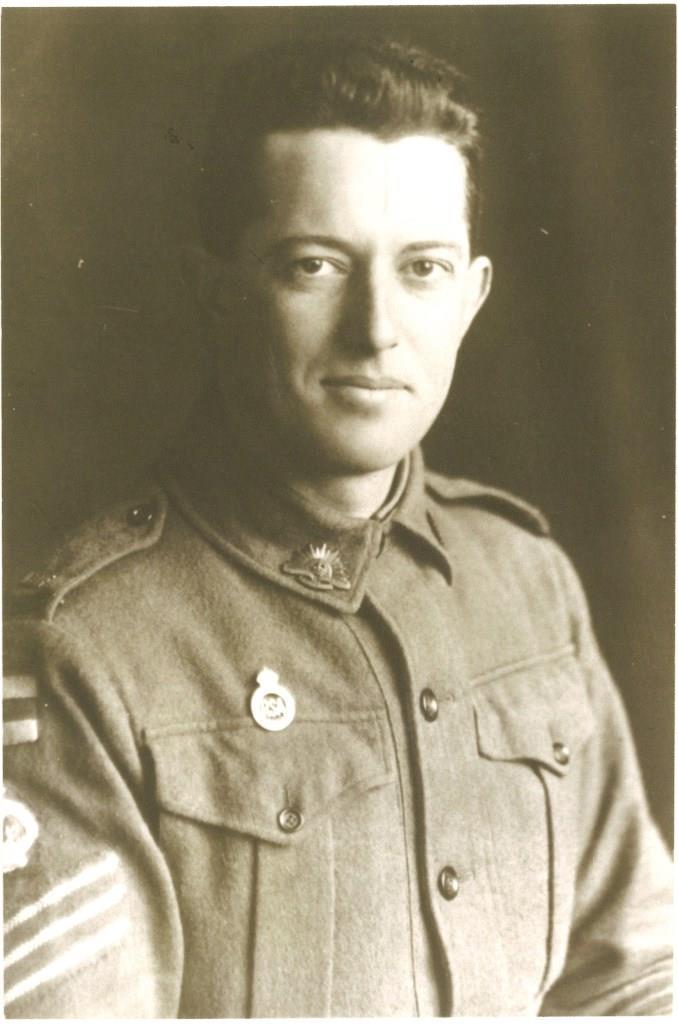
Per his initial military service record (Depot), William Smith was born at Gilgandra, N.S.W.  He gave his age as 19 years and 11 months, his marital status as single, and his occupation as labourer.  His description on his Certificate of medical examination was height 5 feet 8 inches tall, weight 11 stone, with a dark complexion, blue eyes, and dark hair.  His religious denomination was Presbyterian.  William Smith completed his medical examination at Gilgandra on 11th October 1915 (the day after the Coo-ees had left Gilgandra), but was not attested by Captain Nicholas until when the Coo-ees were at Stuart Town on 20th October 1915.  He claimed to have previous military experience in the Gilgandra Rifle Club.

It is unclear exactly where William Smith caught up with the Coo-ees, but his initial Application to Enlist in the Australian Imperial Force form dated 11th October 1915 was addressed to the Recruiting Officer at Eumungerie, so it appears his intent was to catch up with the Coo-ees at Eumungerie.  His parents Thomas E. Smith and Margaret E. Smith both signed this form to give their consent, as he was under 21 years of age.   His “Joined on” date on his Attestation Paper was 19th October 1915 (when the Coo-ees were marching from Dripstone to Stuart Town).

He was known as one of Gilgandra’s 35 recruits.

After completing the Coo-ee March he went to Liverpool Camp for training.

Private Smith was examined by a Medical Board at Liverpool Camp, and was discharged as medically unfit on 29th November 1915.

On 1st November 1916 William Smith re-enlisted at Dubbo, and was appointed to Dubbo Depot Battalion.  This Attestation Paper listed his occupation as grocer, and his age as 21 years.  He claimed that he had previous military in the A.I.F., and that he had been discharged due to sickness.

On 9th November 1916 he was transferred to the reinforcements for the 30th Battalion at Liverpool Camp.

On Private Smith’s embarkation roll his address at time of enrolment was Newtown, Gilgandra, N.S.W., and his next of kin is listed as his mother, Mrs Emma Smith, at the same address.

Private Smith departed Sydney on the HMAT Beltana A72 on 25th November 1916 with the 12th reinforcements for the 30th Battalion.

He arrived at Devonport, England, on 29th January1917, and marched into the 8th Training Battalion at Hurdcott, England.

On 31st January 1917 Private Smith was sent to the Camp 10 Hospital at Hurdcott sick.  On 1st February 1917 he was transferred to the Fovant Military Hospital with Mumps.  He was discharged on 15th February 1917 and sent back to the 8th Training Battalion.

Five months later, on 14th July 1917 Private Smith was again admitted to the Camp 10 hospital sick.  He was discharged and returned to the 8th Training Battalion on the 23rd of July 1917.

On 29th August 1917 Private Smith was charged with being absent without leave from midnight on 28th August 1917 until brought back to camp under escort on 11th September 1917.  He was awarded 14 days detention, and forfeited 33 days pay.  He entered Woking Detention Barracks to serve his sentence on 21st September 1917.

On 5th November 1917 Private Smith marched in to the 14th Training Battalion at Codford, England, from the 8th Training Battalion.

On 29th November 1917 Private Smith was charged again with being absent without leave from midnight on 18th November 1917 to 8.15 pm on 24th November 1917.  He was awarded 14 days field punishment No. 2, and forfeited 20 days pay.

On 4th of December 1917 Private Smith proceeded overseas from Southampton to France to reinforce the 56th Battalion.

Upon arrival in France he was sent to the 5th Division Base Depot at Le Harve, France.

On 8th December 1917 he was sent to march out to his unit.

On 11th December 1917, Private Smith was charged with when on active service absenting himself from entrainment on 9th December 1917.  He was awarded 28 days field punishment No. 2 on 11th December 1917.

Private Smith was taken on strength of the 56th Battalion on 13th December 1917, when it was moving from Kemmel, Belgium to Desvres, France.

On 15th January 1918 the 56th Battalion was conducting training at Tingry, France, when Private Smith was sent to the 5th Australian Field Ambulance sick.  He was admitted to a General Hospital in Etaples on 17th January 1918.  On 26th January 1918 he was discharged from hospital to the Australian Infantry Base Depot. .

He marched out to his unit from the Australian Infantry Base Depot at Le Harve on 3rd February 1918.  He rejoined the 56th Battalion on the 17th of February 1918 when it was in the vicinity of Hollebeke, Belgium.

On 20th February 1918 Private Smith was detached for duty with the 14th Field Company Engineers.

A week later, on 27th February 1918 he was sent to the 14th Australian Field Ambulance with Defective Vision.  He was discharged on the 1st of March 1918, and rejoined the Battalion when it was in reserve at Wytschaete, Belgium.

Three weeks later, on 21st March 1918 Private Smith was sent to the 15th Australian Field Ambulance sick with Bronchitis.  He was moved to the 5th Division Rest Station later that day.  On the 22nd of March 1918 he was moved to the 13th Casualty Clearing Station.

On 2nd April 1918 Private Smith was taken by ambulance train and admitted sick to the 55th General Hospital at Boulogne, France.  On 9th April 1918 he was admitted to No. 7 Convalescent Depot at Boulogne.  He was moved to No. 10 Convalescent Depot at Ecault, France, on 11th April 1918.

He was discharged on 25th April 1918, and sent to the  Australian Infantry Base Depot at Le Harve, France.

On 24th May 1918 he marched out to his unit.

On 1st June 1918 Private Smith was charged with drunkenness on 31st May 1918.  He was fined 10 shillings.

On 2nd June 1918 Private Smith rejoined the 56th Battalion when it was conducting training at Bussy Les Daours, France.

On 27th June 1918 Private Smith was charged with being absent from 8.45 am parade without permission.   He was awarded 2 days field punishment No. 2 on 28th June 1918.

On 21st December 1918 the 56th Battalion had just marched to Sivry in Belgium the day before to set up camp for the winter, when Private Smith was sent to the 56th Casualty Clearing Station sick.  On the 23rd of December 1918 he was admitted to the 7th General Hospital sick at Wimereux, France.  On the 24th of December 1918 he was transferred to the 39th General Hospital at Le Harve, France.

Private Smith was transferred to England on the H.T. St. Patrick on 15th January 1919.  On 16th January 1919 he was admitted to the 1st Australian Dermatological Hospital at Bulford, England.

He was discharged on the 7th of March 1919 and transferred to the Convalescent Training Depot at Parkhouse, England.

On 11th March 1919 Private Smith was re-admitted sick to the 1st Australian Determatological Hospital at Bulford, England.

On 11th April 1919 Private Smith was charged with being out of bounds and being in possession of a Khaki uniform whilst a patient at the 1st Australian Dermatological Hospital.  He was awarded 27 days detention and fined 27 days pay.

On 12th April 1919 Private Smith was admitted to the Lewes Detention Barracks to undergo his sentence.

He was released on 7th May 1919, and returned to the 1st Australian Determatological Hospital.

On 10th May 1919 Private Smith was transferred to the 1st Australian General Hospital at Sutton Veny, England.

He was discharged on 2nd June 1919, and transferred to the Number 5 Group at Weymouth, England.

Private Smith commenced his return to Australia aboard the H.M.A.T. Friedrichsruh on 8th July 1919.

He arrived in Australia on 4th September 1919, and was discharged at Sydney on 12th October 1919.
Sidney James De Courcy HEUSTON

Sidney James De Courcy HEUSTON

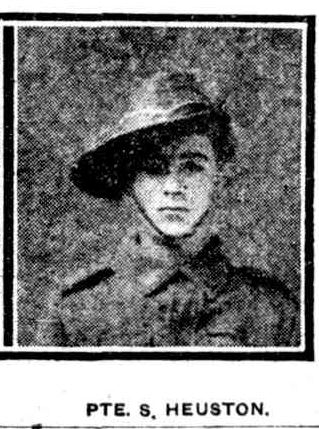
Pte. S. Heuston (The Globe and Sunday Times War Pictorial, 14/10/1916)

Pte. S. Heuston (The Globe and Sunday Times War Pictorial, 14/10/1916)

Per his military service record (regimental no. 4796), Sidney James De Courcy Heuston was born at Coonamble, N.S.W.  He gave his age as 18 years and 1 month, his marital status as single, and his occupation as plumber.  His description on his medical was height 5 feet 7 ¾ inches tall, weight 8 stone 3 lbs., with a dark complexion, grey eyes, and dark brown hair.  His religious denomination was Methodist.  He claimed that he had four years previous military service with the Senior Cadets.

Written on the top of his Attestation Paper is that he ‘Presented at Orange 24/10/15’.  He completed his medical examination on the 24th October 1915 at Orange, and was attested by Captain Nicholas at Orange on 24th October 1915.  “S. J. Deloury Hewston”was named as one of the men who were recruited to join the Coo-ees at Orange in the Leader. [1]

His initial Application to Enlist in the Australian Imperial Force form dated 24th October 1915 was addressed to the Recruiting Officer at Orange, and his postal address was Parkes Street, Wellington.  His parents George Heuston and Louise Heuston both signed this form, giving consent for their son to join, as he was under 21 years of age.  However, it was noted that he had joined the Coo-ee March at Wellington in an article in the Sunday Times a year after he had joined.[2]  His place of enlistment is listed as ‘Wellington’ on the Medical Report on an Invalid form dated 25th September 1916 in his service record.  So it appears he may first have presented to join the Coo-ees when they recruited at Wellington on 16th and 17th October 1915, then caught up with them and joined them at Orange where the Coo-ees stayed overnight on 24th October 1915, after his parents had signed his consent form.

After completing the Coo-ee March he went to Liverpool Camp as reinforcement for the 13th Battalion.

On 7th February 1916 Private Heuston was charged at Liverpool Camp with being absent from special picquet on 5th February 1916.  He was fined 5 shillings.

On his embarkation roll his address at time of enrolment was Park[es] Street, Wellington, N.S.W., and his next of kin is listed as his father, G. W. DeC. Heuston, at the same address.

On 8th March 1916 Private Heuston, along with many of the other Coo-ees, departed Sydney on the HMAT A15 Star of England, and arrived in Egypt on 11th April 1916.

On 19th April 1916, he was transferred to the 45th Battalion in Egypt, along with some of the other Coo-ees.

On 2nd June 1916 Private Hueston left Alexandria with several other Coo-ees in  45th Battalion aboard the transport Kinfauns Castle, bound for France, arriving at Marseilles on 8th June 1916.

Private Heuston served with the 45th Battalion through its first action at Fleurbaix, France, in July 1916 then as it moved to Pozieres in early August 1916.

On the night of the 5th/6th of August 1916 the 45th Battalion was in the front line trenches between Pozieres and Martinpuich, France.  Private Heuston was wounded in action on 6th August 1916, suffering a gunshot wound to his right leg, and was evacuated to the 3rd Casualty Clearing Station.

He was then admitted to the 13th General Hospital at Boulogne, France, on 7th August 1916.

On 11th August 1916 Private Hueston was sent by the Hospital Ship Jan Breydel to England, and admitted to the 1st Birmingham War Hospital, with a gunshot wound to the right thigh.

On 6th September 1916 Private Heuston was transferred to the 1st Australian Auxiliary Hospital at Harefield, England (3 days after Captain Bill Hitchen had died in the same hospital).

On 28th September 1916 he was discharged from hospital and sent to Weymouth, England.

On 12th November 1916 Private Heuston departed England aboard the H.T. Wiltshire, bound for Australia.

He arrived in Sydney on 31st December 1916, and was discharged medically unfit on 28th February 1917.

[1] ‘The Recruits’, Leader, 25 October 1915,  p. 4, http://nla.gov.au/nla.news-article117842599

[2] ‘The Coo-ees’, Sunday Times, 8 October 1916, p. 9, http://nla.gov.au/nla.news-article121335018


Henry NEIRHOFF

Henry NEIRHOFF

Per his military service record (regimental no. 6836), Henry Neirhoff was born at Sydney, N.S.W.  He gave his age as 24 years and 1 month, his marital status as single, and his occupation as labourer.  His description on his Certificate of medical examination was height 5 feet 3 inches tall, weight 133 lbs, with a fair complexion, blue eyes, and auburn hair.  His religious denomination was Church of England.

‘H. Nierhoff’[sic] was named as being one of the ‘Wongarbon boys’ with the Coo-ees in the Dubbo Liberal and Macquarie Advocate.[1]  He may have been one of the thirteen men who stepped forward and gave his name, ‘either to march under Captain Nicholas, or to come after harvest’, when the Coo-ees recruited in Wongarbon on 14th October 1915.[2]

An initial Application to Enlist in the Australian Imperial Force form in his file was addressed to the Recruiting Officer at Wellington, and gave his postal address as Wongarbon, and was dated 17th October 1915 (the date the Coo-ees left Wellington).

‘H. Neirhoff’ was named as one of six men who joined the Coo-ees ‘on the road from Wellington’ in the Molong Express and Western District Advertiser.[3]

Henry Neirhoff completed his medical examination at Molong on 22nd October 1915, and was attested by Captain Nicholas at ‘Molong (8 miles east)’, along with several other Coo-ees, on 22nd October 1915.  He claimed to have no previous military experience.

After completing the Coo-ee March he went to Liverpool Camp as a reinforcement for the 13th Battalion.

On Monday 3rd January 1916 Private Neirhoff was presented with a wristlet watch by the people of Wongarbon as a send-off present at the Wongarbon Railway Station platform.[4]

On Private Neirhoff’s embarkation roll his address at time of enrolment was Wongarbon, N.S.W., and his next of kin is listed as his brother, R. [Rudolph] Neirhoff, Penshurst, N.S.W.

Private Neirhoff departed Sydney on the SS Port Nicholson on 8th November 1916 with the 22nd reinforcements for the 13th Battalion.

He arrived at Devonport, England on 10th January 1917, and marched into the 4th Training Battalion at Codford, England.

On 16th February 1917 Private Neirhoff was charged with overstaying his leave from midnight 2nd February 1917 till noon 12th February 1917. He was sentenced to 10 days detention and fined 23 days pay.

On 27th February 1917 Private Neirhoff was sent to Bulford Hospital with Scabies. He was discharged on 6th March 1917.

On 22nd May 1917 Private Neirhoff departed from Southampton, England, bound for France.  He was taken on strength of the 13th Battalion on 10th June 1917, when it was in the front line in the vicinity of Messines, Belgium.

On 20th December 1917 a Field General Court Martial was held where Private Neirhoff was charged with desertion whilst on active service from Belgian Chateau camp on 23rd September 1917, to 7th November 1917.  He pleaded not guilty, and was found not guilty of desertion, but guilty of being absent without leave.  He was sentenced to 2 years hard labour.

On 3rd January 1918 Private Neirhoff was admitted to No. 4 Military Prison at Rouen, France, to commence his sentence.

On 31st October 1918 Private Neirhoff was sent to the 10th General Hospital at Rouen, France, suffering Piles.  He was sent back to prison on 9th November 1918.

On 4th February 1919 Private Neirhoff was released from prison with the unserved portion of his sentence suspended.  He rejoined the 13th Battalion on 12th February 1919.

On 4th March 1919 Private Neirhoff was detached for duty at the Corps workshop at Jeumont, France.

On 26th April 1919 he was sent to the Base Depot at Le Harve.

He departed France on 13th May 1919, and arrived in Southampton, England, on 14th of May 1919.

On 23rd July 1919 Private Neirhoff departed England aboard the H.M.A.T. Main, bound for Australia.

He arrived in Sydney on 15th October 1919, and was discharged Termination of Period of Enlistment on 7th November 1919.

[1] ‘Our Soldiers’, The Dubbo Liberal and Macquarie Advocate, 29 October 1915, p. 4, http://nla.gov.au/nla.news-article77601711

[2] The Route March’, The Farmer and Settler, 19 October 1915, p. 3, http://nla.gov.au/nla.news-article116648940

[3] ‘The “Coo-ees” Come’, Molong Express and Western District Advertiser, 23 October 1915, p. 10, http://nla.gov.au/nla.news-article101050484

[4] ‘Wongarbon Soldiers Farewelled’, The Dubbo Liberal and Macquarie Advocate, 7 January 1916, p. 5, http://nla.gov.au/nla.news-article77603646

Joseph William EDWARDS

Joseph William EDWARDS

Per his initial military service record (Depot), Joseph William Edwards was born at Marsden [near Forbes], N.S.W.  He signed his name as William Edwards.  He gave his age as 21 years and 5 months, his marital status as single, and his occupation as general labourer.  His description on his Certificate of medical examination was height 5 feet 9 inches tall, weight 186 lbs, with a medium complexion, brown eyes, and black hair.  His religious denomination was Roman Catholic.  His next of kin on his initial Attestation paper was his father, Joseph Benjamin Edwards, Gilgandra, N.S.W.  He completed his medical examination at Molong on 22nd October 1915, and was attested by Captain Nicholas at ‘Molong (8 miles east)’, along with several other Coo-ees, on 22nd October 1915.  He claimed to have no previous military experience.

‘W. Edwards’ was named as one of six men who joined the Coo-ees ‘on the road from Wellington’ in the Molong Express and Western District Advertiser.[1]

After completing the Coo-ee March he went to Liverpool Camp as reinforcement for the 13th Battalion.

Per his Detailed Medical History of an Invalid form dated 10th January 1916, he enlisted at Wellington, so it appears he first presented to join the Coo-ees when they were recruiting at Wellington.  This form recorded that on 4th January 1916 Private J. W. Edwards was at the Liverpool Railway Station when he jumped off a train on the wrong side and fell, and he suffered a hernia to his left oblique.  He was recommended to have an operation, however he declined.  The Medical Board subsequently found him unfit for military service, and recommended his discharge.

Private Edwards was discharged medically unfit on 15th January 1916.

Joseph William Edwards re-enlisted in the A.I.F. on 27th April 1916 at Dubbo, N.S.W., and he was appointed to Dubbo Depot Battalion.

He was transferred from Dubbo Depot Battalion to Invalids Section A.I.F. Victoria Barracks Sydney N.S.W. from 26th May 1916 to 9th August 1916.

He was transferred from Dubbo Depot Battalion to Liverpool Camp as reinforcement for the 3rd Battalion on 20th September 1916.

On Private Edward’s embarkation roll his address at time of enrolment was Wellington, N.S.W., and his next of kin is listed as his father, J. B. Edwards, P.O., Wellington, N.S.W.

Private Edwards (regimental no. 6744) departed Sydney on the SS Port Nicholson on 8th November 1916 with the 22nd reinforcements for the 3rd Battalion.  He arrived at Devonport, England on 10th January 1917.

He was sent to the 1st Training Battalion at Larkhill, England.

On 10th April 1917 Private Edwards proceeded overseas to France from Folkestone, England.

On 30th April 1917 he marched out to his unit from the Australian Division Base Depot at Etaples.

On 2nd May 1917 Private Edwards was taken on strength of the 3rd Battalion when it was manning the front line in the vicinity of Vaulx, France.

On 13th May 1917 Private Edwards was sent to hospital sick.  He rejoined the Battalion on 29th May 1917.

On 10th July 1917, the 3rd Battalion was conducting ‘recreational training and bomb throwing competitions’ at Buire, France, when 13 men in the Battalion were accidentally wounded by a bomb explosion.[2]  Private Edwards received a severe bomb wound to his back and left hand, and was transported by the 3rd Australian Field Ambulance to the 56th Casualty Clearing Station.  On 23rd July he was admitted to the 1st General Hospital in France.

On 28th of July 1917 Private Edwards was placed aboard the H.T. Warilda for evacuation to England.

He was admitted to the 3rd Southern General Hospital at Oxford, England on 29th July 1917 with bomb wound back severe.

He was listed as ‘Wounded … Pte. J. W. Edwards (Wellington), dangerously’ in the ‘War Casualties’ list in the Evening News on 9th August 1917.[3]

On 30th August 1917 he was transferred to the 3rd Australian Auxiliary Hospital at Darford, England.

On 3rd September 1917 Private Edwards was discharged from hospital and granted leave to report to Weymouth, England on 17th September 1917.

On 19th October 1917 Private Edwards departed England  to commence his return to Australia aboard the H.T. Port Lyttleton.  He arrived in Australia on 16th December 1917.

On 21st January 1918 Private Edwards was discharged medically unfit.

[1] ‘The “Coo-ees” Come’, Molong Express and Western District Advertiser, 23 October 1915, p. 10, http://nla.gov.au/nla.news-article101050484

[2] Australian Imperial Force unit war diaries, 1914-18 War, AWM4 Subclass 23/20 – 3rd Infantry Battalion, AWM4 23/20/29 – July 1917.

[3] ‘War Casualties. New South Wales Losses. 329th List.’, Evening News, 9 August 1917, p. 2, http://nla.gov.au/nla.news-article121255198


Cricket match on Melbourne Cup Day

Cricket match on Melbourne Cup Day

On Tuesday, 2nd November, 1915, the Coo-ees were staying at Lithgow Military Camp.  It was Melbourne Cup Day, and a letter home reported that a sweep had been held by the Lithgow Camp recruits.[1]  (It is not known if the Coo-ees participated).

The Coo-ees spent most of the day in squad drill, and in the afternoon played a cricket match against the Lithgow Camp recruits.[2]

Ursel James Schofield (Bathurst recruit), Charles Edmund Marchant (Gilgandra recruit), and Percy Walter Holpen (Wellington recruit) were named as the best players for the Coo-ees in this cricket match in the following article, published in the Lithgow Mercury:

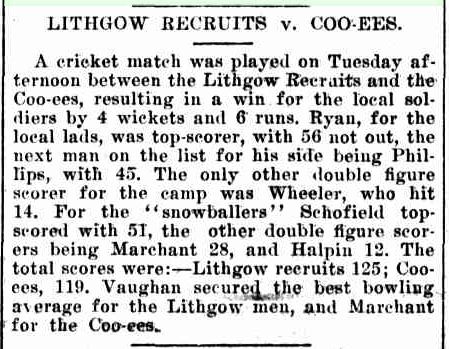
‘LITHGOW RECRUITS v. COO-EES.

A cricket match was played on Tuesday afternoon between the Lithgow Recruits and the Coo-ees, resulting in a win for the local soldiers by 4 wickets and 6 runs. Ryan, for the local lads, was top-scorer, with 56 not out, the next man on the list for his side being Phillips, with 45. The only other double figure scorer for the camp was Wheeler, who hit 14. For the “snowballers” Schofield top-scored with 51, the other double figure scorers being Marchant 28, and Halpin 12. The total scores were: Lithgow recruits 125; Coo-ees, 119. Vaughan secured the best bowling average for the Lithgow men, and Marchant for the Coo-ees.’[3]

'Lithgow Recruits v. Coo-ees', Lithgow Mercury, 15 November 1915, p. 2

‘Lithgow Recruits v. Coo-ees’, Lithgow Mercury, 15 November 1915, p. 2

Sergeant-Major Lee referred to the Melbourne Cup in his speech given at the recruiting meeting held at the Oddfellows’ Hall in Lithgow that evening.

‘Sergt.-major Lee opened with a reiteration of the object of the march – to try to make the young men of Australia realise that every available man should be in the fight for King and country. (Applause.) The time had come to realise that the Empire was fighting for its very existence. … But we must fight to accomplish it. It was no use thinking it. The Empire would not be saved by sitting by the fireside smoking a pipe, at the ale bench pouring down liquor, on the tennis court, at the stadium, or the Melbourne Cup; it could only be accomplished on the battlefield, and for that reason they said, ‘Come, come, come. Your country needs you ; your mates are calling. Won’t you get into khaki? …’[4]

[1] ‘Cowra Boys at Lithgow’, Cowra Free Press, 6 November 1915, p. 2, http://nla.gov.au/nla.news-article99695362

[2] ‘The Route March’, The Farmer and Settler, 5 November 1915, p. 3, http://nla.gov.au/nla.news-article116680017

[3] ‘Lithgow Recruits v. Coo-ees’, Lithgow Mercury, 3 November 1915,  p. 2, http://nla.gov.au/nla.news-article218452404

[4] ‘Recruiting Meeting’, Lithgow Mercury, 3 November 1915, p. 2, http://nla.gov.au/nla.news-article218452420


Charles Robert RICHARDSON

Charles Robert RICHARDSON

Per his military service record (regimental no. 4884), Charles Robert Richardson was born at Castle Hill, N.S.W.  He gave his age as 24 years and 8 months, his marital status as single, and his occupation as labourer. His description on his medical was 5 feet 5 ½ inches tall, weight 132 lbs., with a fair complexion, blue eyes, and brown hair. His religious denomination was Church of England. He claimed that he had no previous military service. He completed his medical examination, and was attested by Lieutenant R. Howe, at Parramatta, on the 11th November 1915.

After a successful recruiting meeting the evening before, the Coo-ees left Parramatta on the morning of 11th November 1915, with an official count of 27 new recruits from that town.

After the Coo-ee March Charles Robert Richardson went into Liverpool Camp as reinforcement for the 13th Battalion.

On Private Richardson’s embarkation roll his address at time of enrolment was C/o  Mrs Clark, Harris Street, Harris Park, N.S.W., and his next of kin is listed as his mother, Mrs M.A. Richardson, C/o Mrs McKay, Sydney Road, Granville, N.S.W.

On 8th March 1916 Private Richardson departed Sydney on the HMAT A15 Star of England, along with many of the other Coo-ees, as part of the 15th reinforcements for the 13th Battalion. He arrived in Egypt on 11th April 1916.

On 16th April 1916 he was transferred to the 5th Division Cyclist’s Company (along with fellow Coo-ee Private Megarrity).

On 17thJune 1916 Private Richardson left Alexandria aboard the Transport Manitou bound for France, arriving at Marseilles on 25th June 1916.

On 23rd July 1916 Private Richardson was detached for duty with the A.P.M. of the New Zealand Division.

On 8th November 1916 Private Richardson was admitted to the 103rd Field Ambulance suffering Influenza.  On 11th November  1916 he was transferred to a Rest Station.  He rejoined the unit on 16th November 1916.

On 21st November 1916 Private Richardson took part in a trench raid during which he was wounded in action, receiving gunshot wounds to his left leg and arms.  He was evacuated to 103rd Field Ambulance, then to the 8th Casualty Clearing Station .

On 23rd November 1916 he was placed aboard the 18th Ambulance Train for evacuation to the 13th General Hospital at Boulogne, France.

On 26th November 1916 he was embarked at Boulogne on the Hospital Ship Jan Breydel for transport to England.  He was admitted to the Chatham Military Hospital that same day, with multiple gunshot wounds, knees and arms.

On 20th March 1917 Private Richardson was transferred to the 2nd Australian Auxiliary Hospital at Southall, England.

On 22nd March 1917 he was discharged from hospital and granted leave, to report to the Number 2 Command Depot at Weymouth, England, on 6th April 1917.

On 23rd May 1917 Private Richardson departed England at Devonport, aboard the H.M.A.T. Ayrshire, to return to Australia.

He arrived in Sydney on 20th July 1917, and was discharged Medically Unfit on 20th October 1917.

TIMELINE October 1916

TIMELINE October 1916

Saturday, 7 October 1916

Privates Thomas ANDERSON and Archibald MCINTYRE embarked from Sydney on the HMAT A40 Ceramic, and arrived at Plymouth on 21st  November 1916.

Tuesday, 10 October 1916

1st anniversary of the start of the Coo-ee March at Gilgandra on Sunday, 10th October 1915. Click on the following two articles to read what was published in newspapers at that time:

The Coo-ees part in the fray anniversary of the start The Bathurst Times, 10 October, 1916, p. 4.

Anniversary of their start The Sunday Times, October 8, 1916, p. 9.

Friday, 13 October 1916

Privates James Burke and Robert Clyde CAMPBELL arrived on the HMAT A18 Wiltshire.

Sunday, 15 October 1916

Lance Corporal Maurice Bertram FREE was wounded in action in Belgium with a shrapnel wound to his chest.

Thursday, 19 October 1916

Private Joseph ARMSTRONG (who had initially been reported as having been killed in action after the Battle of Fromelles), was reported to be a prisoner of war in Germany on this day.

Wednesday, 25 October 1916

Privates Allan James DENMEAD and James O’NEILL embarked from Sydney on the HMAT A11 Ascanius, and arrived at Devonport in England on 28th December 1916.

Thursday, 26 October 1916

Acting Sergeant Stanley Everard STEPHENS, Acting Sergeant Thomas Walter DOWD, and Acting Corporal Francis Charles FINLAYSON arrived at Plymouth in England on HMAT A14 Euripides, as reinforcements for the 13th Battalion.  Leo Ambrose STINSON (20th Battalion) and Albert Warren PEARCE (1st Battalion) also arrived on the same ship.

Stanley Everard Stephens (Photograph courtesy of M. Stephens)

Stanley Everard Stephens (Photograph courtesy of M. Stephens)

Percy Edward BLACKWOOD re-enlisted in the AIF at Dubbo (who had been discharged at Liverpool on 6th April 1916 after the Coo-ee March).

Friday, 27 October 1916

Patrick Joseph O’LOUGHLIN (O’LOUGHLEN) re-enlisted at Dubbo (after having being discharded at Liverpool on 29th November 1915 medically unfit, with varicous veins).

Saturday, 28 October 1916

Trooper William Solomon CISSMAN arrived in Australia after being sent home from Egypt with club foot.

Tuesday, 31 October 1916

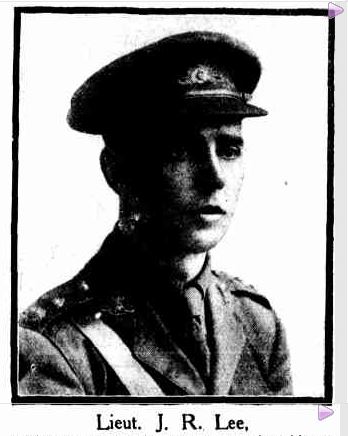
2nd Lieutenant John Robert LEE embarked from Sydney on the HMAT A8 Argyllshire, and arrived in England on 10th January 1917.

Lieutenant J. R. Lee (Sydney Mail, 3/3/1920)

Lieutenant J. R. Lee (Sydney Mail, 3/3/1920)

Albert Warren PEARCE

Albert Warren PEARCE

Per his military service record (Depot), Albert Warren Pearce was born at Richmond, N.S.W. He gave his age as 38 years and 7 months, his marital status as single, and his occupation as labourer. His description on his medical was height 6 feet tall, weight 12 stone 7 lbs., with a fair complexion, blue eyes, and fair hair. His religious denomination was Anglican. He claimed to have had six years previous military service in the Royal Australian Artillery. He completed his medical on 7th October 1915 at Gilgandra, and was attested by Captain Nicholas on 9th October 1915 at Gilgandra.

After completing the Coo-ee March he went to Liverpool Camp as reinforcement for the 13th Battalion.

Following a further medical examination before the Medical Board after arriving at Liverpool Camp with the Coo-ees, Private Pearce was discharged on 29th November 1915 as medically unfit, with defective vision.

On 21st March 1916 Albert Warren Pearce re-enlisted at Dubbo, N.S.W. He passed his medical examination, and was attested at Dubbo, on 23rd March 1916. He trained at Dubbo Depot Company as a reinforcement for the 46th Battalion, until 17th April 1916.

Private Pearce was transferred to Liverpool Camp on 18th April 1916, as reinforcement for the 1st Battalion.

On his embarkation roll his address at time of enrolment was Teroit Street, Richmond, N.S.W., and his next of kin was listed his mother, J. [Jane] Pearce, at the same address.

On 9th September 1916 Private Pearce (regimental no. 6296) departed Sydney on the HMAT A14 Euripides with the 20th reinforcements for the 1st Battalion.

Private Pearce disembarked at Plymouth, England, on 26th October 1916, and he was sent to the 1st Training Battalion.

On 21st November 1916 Private Pearce marched into camp at Fovant from No. 3 Command Depot at Wool in England. He was later moved to No. 7 Camp at Lark Hill, England.

On 23rd June 1917 he was transferred from the 1st Training Battalion to the 17th Field Ambulance, that was forming at Durrington, England.

On 25th October 1917 the 17th Field Ambulance was disbanded, and Private Pearce was sent to the Australian Army Medical Corps Training Depot at Park House, England.

On 4th November 1917 he was attached to the Group Hospital Sutton Veny, England for duty.

Private Pearce left Avonmouth near Bristol, England, on 2nd of January 1919 aboard the SS Karmala, to return to Australia.

He arrived in Australia on 25th February 1919. He was discharged medically unfit due to defective vision on 13th April 1919.

Percy Edward BLACKWOOD

Percy Edward BLACKWOOD

Per his military service record (Depot), Percy Edward Blackwood was born at South Melbourne, Victoria. He gave his age as 29 years, his marital status as single, and his occupation as labourer. His description on his medical was height 5 feet 10 inches tall, weight 154 lbs., with a dark complexion, blue eyes, and brown hair. His religious denomination was Church of England. He claimed that he had no previous military service. He completed his medical on Wellington on 27th October 1915, then made his way to catch up with the Coo-ees at Bathurst, where he was attested by Captain Eade at Bathurst on 28th October 1915.

The National Advocate named Percy Edward Blackwood as one of those who responded to the call made by the Coo-ees for more recruits at Bathurst.[1]

After completing the march he went to Liverpool Camp as reinforcement for the 5th Depot Battalion.

On 17th November 1915 Private Blackwood went before a Medical Board where he was deemed as unfit for military service due to deficient teeth. Private Blackwood was discharged medically unfit on 29th November 1915.

Percy Blackwood re-enlisted in the AIF on 21st December 1915 at Casula, N.S.W. He was attested at Casula on 23rd December 1915, and assigned to Depot Battalion.

He was allocated as a reinforcement for the 20th Battalion on 20th January 1916.

On 5th February 1916 Private Blackwood was charged with being absent without leave from 2nd to the 5th February 1916. He was fined 4 days pay.

On 19th March 1916 Private Blackwood was charged with being absent without leave from 17th to 19th March 1916. He was fined 3 days pay.

On 4th April 1916 Private Blackwood was charged with being drunk and absent without leave on 3rd April 1916 in George Street, Sydney. He was charged and fined 10 Shillings, and his Commanding Officer also recommended he be discharged. On 6th April 1916 Private Blackwood was discharged services no longer required.

Percy Blackwood re-enlisted in the AIF again on 26th October 1916 at Dubbo, N.S.W. He was assigned to Dubbo Depot Battalion until 3rd November 1916, when he was transferred to Liverpool. He was allocated as a reinforcement for the 3rd Battalion.

On his embarkation roll his address at the time of his subsequent enrolment was P.O., Cobar, N.S.W., and his next of kin is listed as his father, J. Blackwood, Montague Street, South Melbourne.

Private Blackwood (regimental no. 6957) departed Sydney on the HMAT A24 Benalla on 9th November 1916, with the 23rd reinforcements for the 3rd Battalion.

On 8th December 1916 he was charged with being absent without leave for 6 hours on the 4th of December 1916 at sea on the A24 Benalla troopship. He was fined 3 days pay.

Private Blackwood disembarked at Devonport, England, on 9th January 1917.

He was sent to the 1st Training Battalion at Lark Hill, England.

On 27th February 1917 Private Blackwood was charged with failing to answer defaulter’s parade on 17th February, 24th February, and 25th February 1917. He was awarded 7 days field punishment number 2.

On 15th March 1917 Private Blackwood was charged with being absent without leave from Tattoo on 10th March till 1700 on 11th March 1917. He was awarded 6 days field punishment number 2 and fined 11 days pay

On 5th May 1917 he was charged with being absent from Headquarters fatigue from 1430 till 2200 on 4th May 1917. He was awarded 1 day field punishment number 2, and forfeited 2 days pay.

On22nd May 1917 Private Blackwood departed Folkestone, England, bound for France.

On 10th June 1917 Private Blackwood was taken on strength of the 3rd Battalion when it was resting at Buire, France.

On 16th August 1917 Private Blackwood was charged with being absent without leave from 2100 on 12th August 1917 till 1830 on 13th August 1917. He was awarded 7 days field punishment number 2 and fined 9 days pay.

On 18th January 1918 Private Blackwood was charged with being absent without leave from 1200 on 31st December 1917 till he surrendered himself to the NCO in charge of the Bailleul Town Guard at 0640 on 1st January 1918. He was fined 12 days pay.

On 7th February 1918 Private Blackwood went on leave to England.

On 19th April 1918 Private Blackwood went before a Field General Court Martial charged with being absent without leave over furlough, from 0730 on 22nd February 1918 till apprehended by the Civil Police in London on 15th March 1918. He was also charged with being absent without leave from 9 a.m. on 12th April 1918 to 10 a.m. on 13th April 1918. He was awarded 90 days field punishment number 2 and fined 110 days pay.

On 30th July 1918 Private Blackwood went before a Field General Court Martial charged with desertion while on active service. He had been absent without leave from 2 p.m. on 12th July 1918 to 6.30 pm on 20th July 1918. He was found guilty and sentenced to 10 years penal servitude. He was sent to the Number 7 Military Prison at Calais, France.

On 5th October 1918 Private Blackwood’s sentence was commuted to 2 years in prison.

On 24th March 1919 Private Blackwood went before a Field General Court Martial charged with joining in a mutiny at the Number 7 Military Prison by ‘continuing … not to fall in after having been warned by proper authorities’. He was found guilty and sentenced to 11 years penal servitude.

On 18th April 1919 Private Blackwood was transferred to Portland Convict Prison in England.

On 9th September 1919 Private Blackwood departed England aboard the H.T. Raranga.

He arrived in Australia on 29th October 1919, and was discharged services no longer required on 30th October 1919.

[1] ‘The response : 21 volunteers from Bathurst’, National Advocate, 29 October 1915, p. 5, http://nla.gov.au/nla.news-article158157113


Edward Montgomery SHEPPARD

Edward Montgomery SHEPPARD

Per his military service record (Depot), Edward Montgomery Sheppard was born at Gerogery, near Albury, N.S.W. He gave his age as 25 years and 1 month, his marital status as single, and his occupation as fettler. His description on his medical was height 5 feet 8 inches tall, weight 136 lbs., with a fair complexion, blue eyes, and light brown hair. His religious denomination was Church of England. He claimed he had no previous military experience.

His initial Application to enlist in the Australian Imperial Force form was addressed to the Recruiting officer at Wallerawang, and his postal address was Public School, Rydal, [where his father had been the School Teacher].

He was attested at Lithgow by Captain Eade on 2nd November 1915, when the Coo-ees were at Lithgow, and completed his medical on 2nd November 1915 at Lithgow.

The Lithgow Mercury reported on 5th November 1915 that “Ted” Sheppard had joined the Coo-ees at Lithgow. [1]

After completing the Coo-ee March he went to Liverpool Camp as reinforcement for the 13th Battalion.

His service record shows he served with the 13th Battalion at Liverpool Camp from 11th November 1915 to 17th February 1916, when he was ‘posted as a deserter’.

At the end of March 1917 Edward Sheppard was notified by the Police to go back to the Military as he was never discharged from his previous enlistment.

He completed another Application to enlist in the Australian Imperial Force form on 25th April 1917, addressed to the Recruiting Officer at Lithgow.

A further attestation paper in his military service record showed a “Joined on” date of re-enlistment in the AIF of 7th May 1917, and that he had been working as a charger (furnace man) at G. & C. Hoskins Steel Foundry at Lithgow before this re-enlistment.

On his embarkation roll his address at the time of his subsequent enrolment was Lithgow, N.S.W., and his next of kin is listed as his father, William Charles Sheppard, School Teacher, Belmore, N.S.W.

On 31st October 1917 Private Sheppard (regimental service no. 4710) departed Sydney on the HMAT A14 Euripides with the 13th reinforcements for the 1st Pioneer Battalion.

A certificate of medical examination, and attestation, were completed “At sea” on 11th November 1917, on the HMAT A14 Euripides.

He disembarked at Devonport in England on 26th December 1917, and was sent to the Pioneer Training Battalion at Sutton Veny.

Two days later, on 28th December 1917 he was admitted to hospital sick with scabies. He was discharged on 3rd January 1918.

On 10th January 1918 Private Sheppard was again sent to hospital suffering with scabies. He was discharged on 16th January 1918.

On 31st March 1918 Private Sheppard was sent to hospital again suffering with scabies. He was discharged on 4th April 1918.

On 29th April 1918 Private Sheppard was charged with being absent without leave from midnight on 24th April 1918 till apprehended by the Military Police at 9.45 p.m. on 26th April 1918. He was awarded 2 days Field Punishment number 2 and fined 4 days pay.

On 14th August 1918 Private Sheppard was charged with being absent without leave from 9.30 a.m. on 11th August 1918 till reporting back at 6.30 a.m. on 12th August 1918. He was awarded 2 days Field Punishment Number 2 and fined 3 days pay.

On 28th October 1918 Private Sheppard was sent to hospital suffering conjunctivitis he was discharged on the 1st of November 1918.

On 11th March 1919 Private Sheppard was sent to the Number 1 Command Depot at Sutton Veny, England.

On 29th April 1918 Private Sheppard was charged with being absent without leave from midnight 24th April 1918 to 9.45 p.m. on 26th April 1918. He was awarded 2 days field punishment No. 2, and forfeited 4 days pay.

On 2nd July 1918 he was attached to Depot Wiltshire Regiment at Devizes in England until 27th July 1918.

On 18th August 1918 he has charged with being absent without leave at Sutton Veny from 9.30 a.m. on 11th August 1918 until 6.30 a.m. on 12th August 1918.  He was awarded 2 days field punishment No. 2, and forfeited 3 days pay.

On 28th October 1918 he was admitted to a military hospital with conjunctivitis.  He was discharged from Sutton Veny Hospital on 1st November 1918.

On 1st April 1919 Private Sheppard transferred to the Australian Army Service Corps Depot at Parkhouse, England.

On 5th June 1919 Private Sheppard was charged with being absent without leave from 2200 on 31st May 1919 till 2100 on 1st June 1919. He was fined 1 days pay.

On 30th July 1919 Private Sheppard was charged with being absent without leave from 2130 on 18th July 1919 till 1500 on 25th July 1919. He was awarded 7 days field punishment number 2 and fined 14 days pay.

On 22nd October 1919 he married Matilda Maud Miller, a 23 year old widow, at the Register Office at Warminster, England.

On 21st November 1919 Private Sheppard was placed on indefinite leave.

Private Sheppard returned to Australia with his new wife on H.T. Runic on 20th December 1919.

He disembarked in Australia on 6th February 1920.

He was discharged on 12th March 1920.

[1] ‘Barometer of patriotism’, Lithgow Mercury, 5 November 1915, p. 4, http://nla.gov.au/nla.news-article218448463