Category Archives: Recruits

Colin David WREN

Colin David WREN

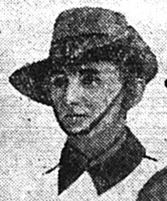
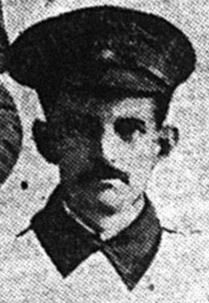
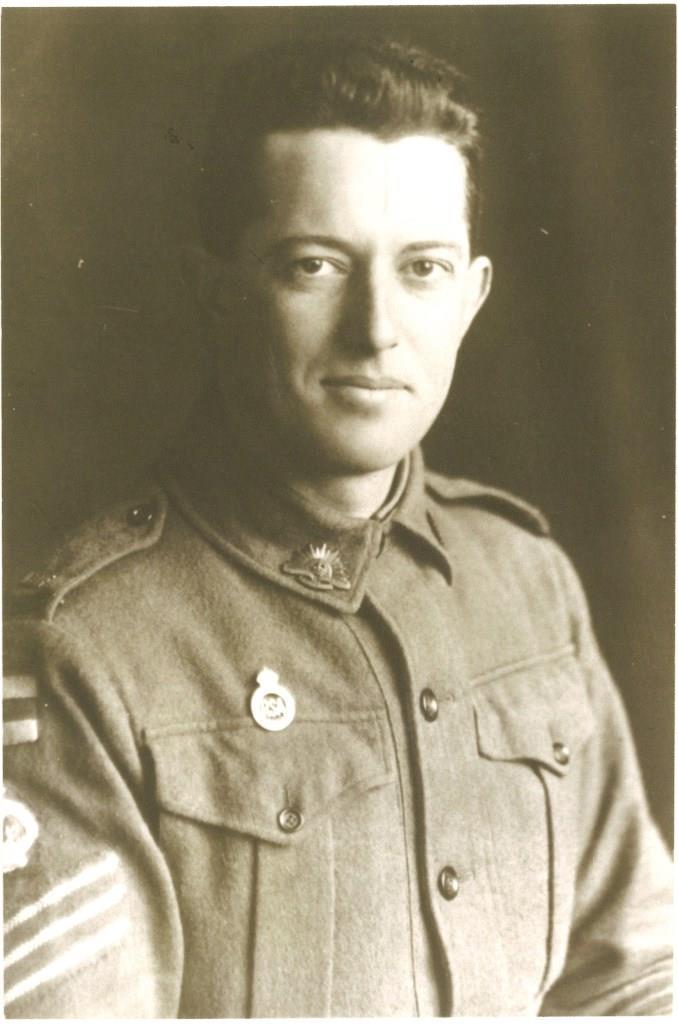
Colin David Wren. Photograph courtesy of P. Kahler.

Colin David Wren. Photograph courtesy of P. Kahler.

Per his military service record (regimental no. 4623), Colin David Wren was born at Calcutta, India. He gave his age as 40 years and 5 months, his marital status as married, and his occupation as laborer. His description on his medical was height 5 feet 10 inches tall, weight 142 lbs., with a medium complexion, green eyes, and dark hair. His religious denomination was Church of England. He claimed that he had six years previous military experience in India. He completed his medical on 19th October 1915 at Lithgow, and was attested by Lieutenant F. Middenway at Lithgow on 2nd November 1915 (when the Coo-ees were in Lithgow).

He was reported as having joined the Coo-ees in the Cowra Free Press.[1]

After completing the Coo-ee March he went to Liverpool Camp as reinforcement for the 13th Battalion.

Private Wren was given a send-off at Tallarook woolshed [near Broula] in January 1916, where he was presented with a gold wristlet watch, and he ‘in responding, made a vigorous appeal to the manhood of Broula to enlist, and was successful in securing five recruits’.[2]

On his embarkation roll his address at time of enrolment was Grenfield [i.e. Grenfell] Road, Broula, via Cowra, N.S.W., and his next of kin is listed as his wife, Mrs. M. [Margaret] Wren, at the same address.

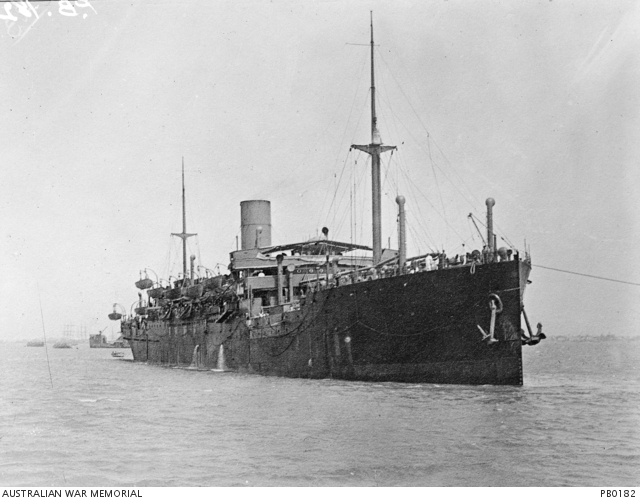
On 16th February 1916 Private Wren was one of the first group of Coo-ees to embark overseas on active service, and departed Sydney on the HMAT Ballarat A70 as 14th reinforcement for the 13th Battalion.

HMAT Ballarat A70, 18/2/1916. Photograph from the AWM Collection PB0182.

HMAT Ballarat A70, 18/2/1916. Photograph from the AWM Collection PB0182.

The HMAT Ballarat A70 arrived in Egypt on 22nd March 1916.

On 1st April 1916 Private Wren, (along with the other Coo-ees he had travelled to Egypt with), was transferred to the 54th Battalion at Ferry Post.

On 12th April 1916 Private Wren was transferred to the 1st Australian Stationary Hospital at Ismailia, Egypt, with Stricture. On 27th April 1916 he was transferred to the British Red Cross Convalescent Home in Montazah. On 8th May 1916 he was discharged for duty to Tel-el-Kebir.

On 25th May 1916 he was transferred to the 4th Pioneer Battalion.

On 5th June 1916 he proceeded to join the British Expeditionary Force in France from Alexandria aboard the Transport Ionian. He disembarked at Marseilles on 15th June 1916.

On 25th October 1916, he was detached for duty at the 1st Anzac Headquarters, from the 4th Australian Divisional Base Depot.

On 8th January 1917 he was taken on strength of the 4th Pioneer Battalion in the field.

Three months later he was admitted to the 1st Field Ambulance sick, on 4th April 1917. He was transferred to the 10th General Hospital in Rouen on 9th April 1917. On 1st May 1917 he was transferred to England on the Hospital Ship Western Australia. He was admitted to the 2nd Southern General Hospital in Bristol with old stricture, on 2nd May 1917.

During the time he was convalescing in hospital in Bristol , Private Wren wrote in a letter dated 16th June 1916, that was reported on in the Cowra Free Press, of ‘his praise of the people of that town in regard to their treatment of wounded Australians’, and he described being taken for a drive around the city by the local people, and he said ‘he and hundreds of other wounded Australians thanked God for the hospitable and kind way in which they had been treated by the people of England’.[3]

On 27th July 1917 he was transferred to the 3rd Auxiliary Hospital from the 2nd Southern General Hospital, with Cystitis.

On 30th July 1917 Private Wren was discharged from hospital, and granted two weeks leave until 13th August 1917, when he reported to No. C. Depot in Weymouth, England.

On 27th September 1917 Private Wren left England for return to Australia on the transport Suevic.

On 3rd January 1918 he was discharged at Sydney as medically unfit.

[1] Another “Cooee!”, Cowra Free Press, 13 November 1915, p. 2, http://nla.gov.au/nla.news-article99695508

[2] A Soldier Farewelled’, Cowra Free Press, 22 January 1916, p. 2, http://nla.gov.au/nla.news-article99696556

[3] ‘Soldier’s letters’, Cowra Free Press, 8 September 1917, p. 2, http://nla.gov.au/nla.news-article99711897


John William THOMPSON

John William THOMPSON

Per his military service record (regimental no. 4609), John William Thompson was born at Camperdown, Sydney, N.S.W. He gave his age as 25 years and 4 months, his marital status as single and his occupation as laborer. His description on his medical was height 5 feet 2 5/8 inches tall, weight 8 stone 11 lbs., with a dark complexion, brown eyes, and dark brown hair. His religious denomination was Roman Catholic. He claimed that he had no previous military experience. He completed his medical on the 24th October 1915 at Orange, and was attested at Orange by Captain Nicholas on the 24th October 1915.

He was named as one of the recruits who joined the Coo-ees at Orange in the Leader.[1]

After completing the Coo-ee March he went to Liverpool Camp as reinforcement for the 13th Battalion.

On his embarkation roll his address at time of enrolment was 4 Raglan Street, Darlington, Sydney, N.S.W., and his next of kin is listed as his father, J. W. Thompson, Botany, Sydney, N.S.W..

On 16th February 1916 Private Thompson was one of the first group of Coo-ees to embark overseas, and departed Sydney on the HMAT Ballarat A70 as 14th reinforcement for the 13th Battalion.

HMAT Ballarat A70, 18/2/1916. Photograph from the AWM Collection PB0182.

HMAT Ballarat A70, 18/2/1916. Photograph from the AWM Collection PB0182.

During the voyage, Private Thompson (along with several other Coo-ees on the ship) was charged with being absent without leave from on 8th March 1916 whilst at Colombo, Ceylon. He was fined 1 pound.

The HMAT Ballarat A70 arrived in Egypt on 22nd March 1916.

On 1st April 1916 John William Thompson was transferred to the 54th Battalion at Ferry Post.

On 3rd April 1916 Private Thompson was sent to the 15th Australian Field Ambulance sick. He was moved back to the 2nd Casualty Clearing Station later that day. He was placed aboard the 4th Hospital Train and moved to the 1st Australian Stationary Hospital at Ismalia in Egypt. He was transferred to the 1st Australian Dermatological Hospital at Abbassia in Egypt on 4th April 1916. He was discharged from hospital for duty on 6th June 1916.

On 6th August 1916 Private Thompson left Alexandria bound for England. He arrived later that month.

On 31st August 1916 Private Thompson was sent to the Fargo Military Hospital ill with an unstated condition. He was discharged and marched into the 4th Training Battalion at Rollerstone in England on 5th September 1916.

On 2nd November 1916 Private Thompson departed Folkestone, England, aboard the Transport Golden Eagle bound for France. He then marched into the 5th Australian Division Base Depot at Etaples, France the next day. He was taken on strength of the 54th Battalion on 22nd November 1916.

On 8th May 1917 Private Thompson was sent to the 5th Australian Field Ambulance suffering from the effects of an inoculation. He was moved back to the 5th Division Rest Station and rejoined the Battalion on 12th May 1917.

On 1st June 1917 Private Thompson was sent to the 6th Field Ambulance ill with “soft sore”. He was moved back to the 5th Division Rest Station later that day. On 6th June 1917 he was transferred to the 39th General Hospital. He was discharged on 22nd June 1917 and sent to the 5th Australian Division Base Depot at Le Harve, France. He rejoined the 54th Battalion on 26th August 1917.

On 2nd October 1917 Private Thompson went on leave to England. Whilst in England he was charged with being absent without leave from 8th October 1917 till 15th October 1917. He was fined 22 days pay.

Private Thompson returned from leave and rejoined his unit on 26th October 1917.

On 30th November 1917 Private Thompson was charged with being absent without leave from 11th November 1917 till 25th November 1917. He was awarded 28 days field punishment number 2.

On 5th January 1918 Private Thompson was charged with being absent without leave from 0900 on 3rd January 1917 till 2150 on 3rd January 1918. He was awarded 7 days field punishment number 2.

On 11th January 1918 Private Thompson was sent to the 14th Field Ambulance sick and he was transferred to the 39th General Hospital. He was discharged on 26th January 1918 and sent to the 5th Australian Division Base Depot at Le Harve, France. He rejoined the Battalion on 20th February 1918.

On 11th April 1918 Private Thompson was wounded in action, receiving a shrapnel wound to his left hand. He was sent to a Field Ambulance then moved back to a casualty clearing station, then on 12th April 1918 he was admitted to the 12th General Hospital at Rouen, France. He was discharged on 13th April 1918 and sent to the 5th Australian Division Base Depot at Le Harve, France. He rejoined the 54th Battalion on 10th June 1918.

On 25th June 1918 Private Thompson was sent to the 5th Army School of Cookery. On 11th July 1918 he was sent to the Australian Division Base Depot, then on 31st July 1918 he rejoined his unit.

On 21st August 1918 he was received by Assistant Provost Marshal Havre from Paris. On 23rd August 1918 he was placed in custody pending disposal. On 26th August 1918 Private Thompson was charged with being absent without leave from the 0730 on 18th August 1918 till 2240 on 20th August 1918. He was awarded 14 days field punishment number 2.

On 29th September 1918 Private Thompson was wounded in action for the second time, receiving a gunshot wound to his left hand. He was sent to a Field Ambulance then moved back to the 30th Casualty Clearing Station. On 1st October 1918 he was admitted to the 4th General Hospital.

On 12th October 1918 he was placed aboard a Hospital Ship for evacuation to England. He was admitted to the Ontario Military Hospital at Orplington, England later that day.

Whilst in hospital Private Thompson was charged with being absent without leave from 2100 on 21st October 1918 till 1900 on 22nd October 1918. He was fined 1 days pay.

He was discharged from hospital on 29th October 1918 and granted leave to report to the Number 4 Command Depot at Hurdcott in England on 12th November 1918.

On 16th November 1918 Private Thompson was charged with being absent without leave from 1030 on 13th November 1918 till 1000 on 16th November 1918. He was fined 3 days pay.

On 18th November he marched into No. 4 Command Depot at Hurdcott from Army Headquarters in London ex furlough.

On 2nd December 1918 Private Thompson marched into the Australian Army Medical Corps Training Depot.

Private Thompson departed England on 5th January 1919 for return to Australia aboard the Transport Kanowna. He disembarked in Sydney on 14th March 1919. He was discharged at Sydney medically unfit with amputated forefinger left hand, gunshot wound, on 5th May 1919.

[1] ‘The Recruits’, Leader, 25 October 1915, p. 4, http://nla.gov.au/nla.news-article117842599

William Charles WALKER

William Charles WALKER

Per his initial military service record (4616), William Charles Walker was born at Norfolk, England. He gave his age as 22 years and 10 months, his marital status as single, and his occupation as labourer. His description on his medical was height 5 feet 6 ½ inches tall, weight 10 stone 4 lbs, with a medium fair complexion, brown eyes, and dark brown hair. His religious denomination was Church of England. He had a tattoo mark of clasped hands and English and American flags on his right forearm. He completed his medical at Molong on 22nd October 1915, and was attested by Captain Nicholas at Molong (8 miles east) on 22nd October 1915. He claimed to have no previous military experience.

It was reported in The Western Champion that the Parkes Recruiting Association had held a recruiting meeting ‘for the purpose of enrolling recruits who were willing to join the volunteers now on the way, by road, from Gilgandra to Sydney’, and that ‘five men had mounted the lorry in response to the appeal’, and that ‘one of them went on to Dubbo’, with the remaining four planning to proceed to Molong to join the contingent.[1] William Charles Walker was one of the four recruits sent by the Parkes Recruiting Association to join the Coo-ees at Molong.

After completing the march he went to Liverpool Camp as reinforcement for the 13th Battalion.

On his embarkation roll his address at time of enrolment was Wayvilla, Melford Street, Hurlstone Park, Sydney, N,S,W., and his next of kin is listed as his father, M. Walker, 6th St. Clement Street, Barnsbury, London, England.

On 16th February 1916 Private Walker was one of the first group of Coo-ees to embark overseas, and departed Sydney on the HMAT Ballarat A70 as 14th reinforcement for the 13th Battalion.

HMAT Ballarat A70, 18/2/1916. Photograph from the AWM Collection PB0182.

HMAT Ballarat A70, 18/2/1916. Photograph from the AWM Collection PB0182.

The HMAT Ballarat A70 arrived in Egypt on 22nd March 1916. On 1st April 1916 Private Walker was transferred to the 54th Battalion.

On 19th June 1916 Private Walker left Alexandria aboard H.T. Caledonian bound for France, and arrived at Marseilles on 29th June 1916.

Just three weeks later, on 19th/20th July 1916 Private Walker was wounded in action during the Battle of Fromelles, receiving a gunshot wound to his right arm. On 22nd July 1916 he was placed aboard the Hospital Ship Cambria at Boulogne, bound for England. On 23rd July 1916 he was admitted to the Southwark Military Hospital at East Dulwich, England.

He was discharged from hospital on 18th September 1916 and marched into the 14th Training Battalion.

His service record holds a certified extract of a marriage certificate for William Charles Walker and Jessie Elizabeth Browning at the Parish of St. James Church, Islington, dated 16th December 1916.

On 22nd February 1917 Private Walker was charged with being absent without leave from Tattoo on 2nd February 1917 till 0850 on 18th February 1917. He was awarded 17 days detention and fined 31 days pay.

On 16th March 1917 Private Walker was admitted to the Wareham Isolation Hospital suffering from Mumps. He was discharged and sent to the Number 4 Command Depot on 4th April 1917.

On 28th April 1917 Private Walker was charged with being absent without leave from Tattoo from 18th April 1917 until 22rd April 1917. He was awarded 6 days Field Punishment Number 2 and fined 16 days pay.

On 10th May 1917 Private Walker was transferred to the 61st Battalion.

On 6th July 1917 Private Walker went before a District Court Martial at Hurdcott charged with being absent without leave from Tattoo from 12th May 1917 till apprehended by the Military Police at 2030 on 12th June 1917. He pleaded guilty and was sentenced to 60 days detention and fined 115 days pay. He was sent to the Wadsworth detention barracks to undergo his sentence. He was released from Wadsworth Detention Barracks on 27th August 1917 and marched into the 61st Battalion.

On 13th September 1917 Private Walker departed Southampton bound for France, to reinforce the 54th Battalion. He marched into his unit in the 54th Battalion in France on 2nd October 1917.

On 30th January 1918 Private Walker was charged with being absent without leave from 9 pm on 21st November 1917 till apprehended by the Military Police at 11 am on 11th December 1917. He was awarded 24 days Field Punishment Number 2 and fined 45 days pay.

A letter in his service record from his mother dated 15th October 1919 advised that his father, Matthew Walker, was killed in an air raid in London on 28th January 1918.

On 5th February 1918 Private Walker proceeded to the UK on leave. On 20th February 1918 he was granted an extension of leave from 20th to 27th February 1918.

On 4th April 1918 Private Walker went before a District Court Martial held at 58 Warwick Square, London, charged with being absent without leave in that he failed to report to the RTO at Victoria Station at 7.30am on 27th February 1918 until he surrendered himself to the civil police on 24th March 1918. He was fined 37 days pay.

On 23rd April 1918 Private Walker went before another District Court Martial held at Warwick Square charged with deserting His Majesty’s Service on 7th April 1918 by failing to proceed overseas to join his unit in France as it was his duty to do and remained absent without leave till apprehended by the Civil Police in London on 15th April 1918. He pleaded not guilty and was found guilty. He was sentenced to 6 months detention and fined 199 days pay.

On 24th April 1918 Private Walker marched into the Lewes Detention barracks to undergo his sentence.

On 15th August 1918 he was discharged from detention with the remainder of his sentence suspended, to march into Number 1 Command Depot at Sutton Veny, England.

His service record shows that he was reported absent without leave again a week later.

On 12th November 1918 Private Walker went before a District Court Martial charged with being absent without leave from 2359 on 22nd August 1918 till 0730 on 3rd October 1918 (when he returned), then being absent without leave from 0900 on 12th October 1918 till 0930 on 2nd November 1918. He pleaded guilty and was sentenced to 120 days detention.

On 27th November 1918 Private Walker marched into the Lewes Detention barracks to undergo his sentence. On 13th February 1919 he was released from detention with the remainder of his sentence suspended, to the 54th Battalion.

On 6th March 1919 Private Walker was charged with being absent without leave from 1400 on 17th February 1919 till 1700 on 28th February 1919. The matter was dismissed.

On 15th March 1919 Private Walker was charged with being absent without leave from 0900 on 11th March 1919 till 1200 on 14th March 1919. He was awarded 5 days Field Punishment Number 2 and fined 9 days pay.

On 19th April 1919 Private Walker was charged with being absent without leave from 13th April 1919 to 17th April 1919. The case was dismissed.

On 17th July 1919 Private Walker was admitted to the 1st Australian Auxiliary Hospital at Harefield, England. He was discharged on 21st July 1919.

On 24th August 1919 Private Walker was “granted indefinite leave awaiting, awaiting a family ship”.

Private Walker applied for discharge in the U.K., his reason stated in his Application for a Discharge in a Country other than Australia, dated 8th September 1919, as: “My wife now being pregnant I think it wise for me to stay in England. My mother also getting on in years and her being a widow, I think it my duty to try and comfort her, but if returned to Australia, it would cause inconvenience on both sides. I can obtain employment, my relations are holding business in London. I must note the fact that my father was killed in an Air Raid over London on 28.1.18”.

This application was approved, and he was discharged in London on 18th December 1919.

[1] ‘Marching to Sydney’, Western Champion, 21 October 1915, p. 19, http://nla.gov.au/nla.news-article112309615


Edwin Joseph FULLER

Edwin Joseph FULLER

Per his military service record (regimental no. 4493), Edwin Joseph Fuller was born at Norwood, England. He gave his age as 21 years and 6 months, his marital status as single and his occupation as laborer. His description on his medical was height 5 feet 3 7/8 inches tall, weight 9 stone 10 lbs., with a fair complexion, brown eyes, and brown hair. His religious denomination was Church of England. He claimed that he had no previous military experience. He completed his medical on the 23rd October 1915 at Orange, and was attested by Captain Nicholas at Orange on the 24th October 1915.

He was named as one of the recruits who joined the Coo-ees at Orange in the Leader.[1]

After completing the Coo-ee March he went to Liverpool Camp as reinforcement for the 13th Battalion.

On his embarkation roll his address at time of enrolment was Cresswell Hall, Easter Avenue, Kensington, Sydney, N.S.W., and his next of kin is listed as his father, J. E. [John Edwin] Fuller, 6 Southdown Road, Stanley Road, Wallington, Surrey, England. (He had listed his posted address as “Orange” on his initial Application to Enlist in the Australian Imperial Force form addressed to the Recruiting Officer at Orange).

On 16th February 1916 Private Fuller was one of the first group of Coo-ees to embark overseas, and departed Sydney on the HMAT Ballarat A70 as 14th reinforcement for the 13th Battalion.

HMAT Ballarat A70, 18/2/1916. Photograph from the AWM Collection PB0182.

HMAT Ballarat A70, 18/2/1916. Photograph from the AWM Collection PB0182.

During the voyage, Private Fuller was charged with being absent without leave from 0500 till 1900 on 8th March 1916 whilst at Colombo, Ceylon. He was fined 1 day’s pay.

The HMAT Ballarat A70 arrived in Egypt on 22nd March 1916. On 1st April 1916 Private Fuller was transferred to the 54th Battalion.

On 19th June 1916 Private Fuller left Alexandria aboard H.T. Caledonian bound for France. On 26th June 1916 whilst at sea he was charged with Slackness at Sentry Post. He was awarded 14 days Field Punishment Number 2. The HT Caledonian arrived at Marseilles on 29th June 1916.

On the 19th/20th July 1916 Private Fuller participated in the Battle of Fromelles. He survived the battle unscathed, however on 31st July 1916 he was sent to the 14th Field Ambulance suffering shell shock. On 2nd August he was moved back to a Casualty Clearing Station. He rejoined the 54th Battalion on 16th August 1916.

On 25th November 1916 Private Fuller was sent to the 14th Field Ambulance ill with Influenza. On 26th November 1916 he was moved back to the 38th Casualty Clearing Station. On 28th November 1916 he was placed aboard an Ambulance train and sent to the 5th General Hospital at Rouen, France, being admitted on 29th November 1916. On 8th December 1916 he was placed aboard the Hospital Ship Carisbrook Castle at Le Harve and evacuated to England.

After he had recovered in England, on 16th January 1917 Private Fuller departed Folkestone, England, aboard the Transport Princess Clementine bound for France. On 17th January 1917 he arrived at the 5th Australian Division Base Depot at Etaples, France.

On 19th January 1917 Private Fuller was charged with being absent from medical parade after being duly warned for draft. He was awarded 4 days Field Punishment Number 2.

On 31st January 1917 Private Fuller was charged with being in Etaples without a pass. He was awarded 8 days Field Punishment Number 2.

On 8th February 1917 Private Fuller rejoined the 54th Battalion when it was manning the front line in the vicinity of Longueval, France.

On 30th April 1917 Private Fuller was sent to the 15th Field Ambulance sick with Influenza. He was admitted to the 5th Division Rest Station later that day. On 25th June 1917 he rejoined the 54th Battalion when it was conducting training at Warloy, France.

On 16th September 1917 Private Fuller was promoted to Lance Corporal.

On 20th September 1917 Lance Corporal Fuller went on leave to England. He rejoined the 54th Battalion on 4th October 1917.

Three weeks later on 23rd October 1917 Lance Corporal Fuller was wounded in action, being gassed. He was sent to the 8th Australian Field Ambulance. On 24th October 1917 he was moved back to the 5th Division Rest Station. He rejoined the 54th Battalion on 7th November 1917.

On 25th February 1918 Lance Corporal Fuller went to Paris on leave. He rejoined the 54th Battalion on 9th March 1918.

On 19th March 1918 Lance Corporal Fuller was sent to the 14th Field Ambulance suffering Scabies. He was sent to the 5th Australian Division Rest Station later that day, He rejoined the 54th Battalion on 23rd March 1918.

On 25th September 1918 Lance Corporal Fuller went on leave to England.

He returned from leave on 11th October 1918 and was transferred to the 56th Battalion.

On 9th April 1919 Lance Corporal Fuller marched into the Australian Base Depot at Le Harve, France, to commence his return to Australia. He departed France on 16th April 1919. He arrived at Weymouth, England on 17th April 1919 and marched into the Number 5 Group.

Lance Corporal Fuller departed Devonport, England, on 2nd June 1919 for return to Australia, aboard the H.T. Beltana. He arrived in Australia on 19th July 1919. He was discharged Termination of Enlistment on 12th September 1919.

[1] ‘The Recruits’, Leader, 25 October 1915, p. 4, http://nla.gov.au/nla.news-article117842599


Percy George BROWN

Percy George BROWN

Per his military service record (regimental no. 4446), Percy George Brown was born on 27th July 1894 at Westham, England. He gave his age as 21 years and 3 months, his marital status as single and his occupation as labourer. His description on his medical was height 5 feet 7 inches tall, weight 148 lbs., with a fair complexion, blue eyes, and brown hair. His religious denomination was Church of England. He claimed that he had 18 months previous military service in the 1st C. B. Kings Royal Rifles. He completed his medical on the 16th October 1915 at Wellington, and was attested by Captain Nicholas at Dripstone on the 19th October 1915.

Percy George Brown was named as being one of the Wongarbon recruits in the Dubbo Liberal and Macquarie Advocate.[1]

After completing the Coo-ee March he went to Liverpool Camp as reinforcement for the 13th Battalion.

On his embarkation roll his address at time of enrolment was not listed, and his next of kin is listed as his father, C. H. [Charles Henry] Brown, 81 Corporation Street, West Ham, London, England. (The address he gave on his Application to Enlist in the Australian Imperial Force form addressed to the Recruiting Officer at Dubbo was ‘Box 5, Cunnamulla Qld).’

Just before Private Brown embarked, it was reported in the Dubbo Liberal and Macquarie Advocate that he had written “The first batch of the Gilgandra “Coo-ees” to leave for the front will sail at the end of the present week. About 15 men, including four who enlisted at Dubbo, have been transferred into an earlier reinforcement of the same battalion, which the rest of the “Coo-ees” are in”.[2]

On 16th February 1916 Private Brown was one of this first group of Coo-ees to embark overseas, and departed Sydney on the HMAT Ballarat A70 as 14th reinforcement for the 13th Battalion, which arrived in Egypt on the 22nd March 1916.

HMAT Ballarat A70, 18/2/1916. Photograph from the AWM Collection PB0182.

HMAT Ballarat A70, 18/2/1916. Photograph from the AWM Collection PB0182.

On the 1st April 1916 he was transferred to the 54th Battalion at Ferry Post.

On 3rd April 1916 he was admitted to the 1st Field Ambulance, then moved to the 2nd Casualty Clearance Station at Ismailia with defective vision. On 4th April 1916 he was admitted to the 1st Australian Stationary Hospital with Myopia. On 9th April 1916 he returned to his unit.

On 2nd June 1916 he was admitted to the 1st Australian Stationary Hospital with defective vision. On 8th June he was transferred to the Training Battalion at Alexandria.

On 6th August 1916 Private Brown left Alexandria aboard His Majesty’s Transport Megantic, bound for England. On 1st December 1916 he marched into the 4th Training Battalion at Codford.

On 31st December 1916 he departed Folkestone aboard the transport Princess Henrietta for France. He marched into the 5th Australian Division Base Depot at Etaples on 1st January 1917.

On 6th February 1917 Private Brown marched out of the Base Depot and on 8th February 1917. He was taken on strength of the 54th Battalion when it was manning the front line near Longueval France. On 24th February 1917 he was admitted to the 13th Australian Field Ambulance for eye treatment. He rejoined his Battalion on 25th February 1917.

On 4th April 1917 Private Brown was sent to hospital sick. On 20th April 1917 he was admitted to the 11th Stationary Hospital at Rouen with Influenza. On 24th April 1917 he was sent to the 2nd Convalescent Depot. On 1st May 1917 he was transferred to the 11th Convalescent Depot. On 29th July 1917 he was transferred to the 5th Australian Division Base Depot at Le Harve. He rejoined the 54th Battalion on 18th August 1917 when it was refitting and training at Renescure, France.

On 18th October 1917 Private Brown was admitted to the 8th Field Ambulance with debility. He was sent to the 5th Division Rest Station that same day. On the 30th of October 1917 he was sent to the 50th Casualty Clearing Station. On the 4th of November 1917 he was transferred to the 6th General Hospital at Rouen with Bronchitis. On the 8th of November 1917 he was transferred to the 2nd Convalescent Depot, then on 11th November 1917 he was sent to the 11th Convalescent Depot. On 30th January 1918 he marched into the 5th Division Base Depot at Le Harve. On 20th February 1918 he returned to the 54th Battalion when it was in the front line near Wijtschate, Belgium.

On 26th February 1918 Private Brown went on leave to the United Kingdom. He returned to the Battalion on 15th March 1918 when it was in reserve near Dranoutre, Belgium.

On 24th April 1918 Private Brown was with the 54th Battalion when it defending the vicinity of Villers Bretonneux, France. The Germans launched an attack on the Battalion which included the use of gas shells. The attack was repulsed with heavy casualties suffered by the Germans. The 54th Battalion suffered 3 men killed, 10 wounded, and 28 gassed. Private Brown was amongst those gassed. He was evacuated to the 14th Australian Field Ambulance then moved to the 61st Casualty Clearing Station. On 25th April he was sent to the 10th General Hospital at Rouen, then on 28th April to the 73rd General Hospital at Trouville, France. On 13th June 1918 he was transferred to the 1st Australian Convalescent Depot at Le Harve. On 3rd August 1918 he marched into the 5th Australian Division Base Depot.

On 13th August 1918 he rejoined the 54th Battalion when it was at Fuilloy, France, preparing to move back into the line.

On 27th September 1918 Private Brown was admitted to the 14th Australian Field Ambulance sick. On 28th September 1918 he was moved back to the 20th Casualty Clearing Station. On 29th September 1918 he was transferred to the 3rd Stationary Hospital at Rouen. On 30th September 1918 he was transferred to the 2nd Convalescent Depot. On 1st October 1918 he was moved to the 6th General Hospital. On 4th October 1918 he was evacuated to England, arriving at the 2nd Western General Hospital in Manchester on 5th October 1918. On 13th November 1918 he was transferred to the 3rd Auxiliary Hospital at Dartford. On 25th November 1918 he moved to the 2nd Convalescent Depot at Weymouth.

On 9th December 1918 Private Brown departed England for return to Australia aboard HT Argyllshire.

He arrived in Australia on 14th February 1919, and was discharged on 10th October 1919.

Private Brown’s return to Australia was reported as follows in The Dubbo Liberal and Macquarie Advocate: “Recently returned from the front, after three years of active service, Private P. G. Brown. He joined up with “The Coo-ees” at Wongarbon early in October, 1915. He has seen service in Egypt and France, and was wounded and gassed. His many friends in Wongarbon and district will be pleased to hear of his safe return”.[3]

[1] ‘Our Soldiers’, The Dubbo Liberal and Macquarie Advocate, 29 October 1915, p. 4, http://nla.gov.au/nla.news-article77601711

[2] ‘Our Soldiers’, The Dubbo Liberal and Macquarie Advocate, 4 February 1916, p. 4, http://nla.gov.au/nla.news-article77604424

[3] ‘Personal Notes’, The Dubbo Liberal and Macquarie Advocate, 7 March 1919, p. 3, http://nla.gov.au/nla.news-article75636042


Arthur Ernest MCGREGOR

Arthur Ernest MCGREGOR

Arthur Ernest McGregor (Daily Telegraph 22/9/1916)

Arthur Ernest McGregor (Daily Telegraph 22/9/1916)

Per his military service record (regimental no. 10156), Arthur Ernest McGregor was born at Newtown, N.S.W. He gave his age as 31 years, his marital status as married, and his occupation as baker. His description on his medical was height 5 feet 9 inches tall, weight 10 stone, with a dark complexion, dark blue eyes, and dark hair. His religious denomination was Church of England. He claimed that he had no previous military service. He as attested at Springwood on the 5th November, 1915, then completed his medical at Springwood on the 8th November 1915. The Coo-ees were in Springwood on the night of the 8th November 1915, where they gained 5 recruits, and this date was listed as the “joined on” date on his attestation paper, and also on his embarkation nominal roll.

His older brother Andrew James McGregor was already a recruit on the march, having joined the Coo-ees at the start at Gilgandra. He too was a baker, who had sold his business in Gilgandra to join the Coo-ees.

After completing the march Andrew James McGregor went to Liverpool Camp as reinforcement for the 13th Battalion until 18th February 1916, when he transferred to the 6th Reinforcements for 19th Army Service Corps Company 2nd Field Bakery.

On his embarkation roll his address at time of enrolment was 10 Fairmount Street, Petersham N.S.W., and his next of kin is listed as his Aunt, Mrs. B. H. Campbell, at the same address.

On 5th May 1916 Private McGregor departed Sydney on the HMAT Karroo A10, arriving in Egypt on the 7th June 1916.

On the 10th July 1916 he embarked for Marseilles on the transport Tunisean, arriving on 16th July 1916. He marched into 2nd Division B Depot at Etaples on 19th July 1916.

On the 29th July 1916 he was taken on strength as reinforcement to the 2nd Field Bakery at Calais.

On 21st November he was admitted to hospital sick, and evacuated to England on 5th December 1916. He was admitted to the 3rd Auxiliary Hospital in England on 14th December 1915. He was discharged to Perham Downs on furlough from 29th December 1916 to 13th January 1917.

On 30th January 1917 he marched in from No. 1 Command Depot to R.S.C. Training Depot at Parkhouse. He proceeded overseas with A.S.C. reinforcements from Folkstone on 25th February 1917, and marched into No. 2 Base Supply Depot at Etaples on 27th February 1917. On 30th March 1917 he was posted to the 2nd Field Bakery at Rouen.

On 8th July 1917 he proceeded on leave to the United Kingdom.  He rejoined his unit in France on 19th July 1917.

He went on leave again to the UK from 12th September 1918 to 26th September 1918.

On 12th December 1918 he went to hospital at Rouen sick, then was discharged to duty on 14th December 1918.

On 12th March 1919 he left Havre in France for England.

He was granted leave from 9th April 1919 to 9th September 1919 to make confectionary in London (non military employment), however this leave was cancelled on 12th June 1919, and he returned to 2nd Field Bakery on 8th July 1919.

He began his return to Australia on HT Persic on 13th July 1919, arriving in Australia on 2nd September 1919. He was discharged on 1st February 1920.

Andrew James MCGREGOR

Andrew James MCGREGOR

Andrew James McGregor (Daily Telegraph 22/9/1916)

Andrew James McGregor (Daily Telegraph 22/9/1916)

Per his military service record (regimental no. 4855), Andrew James McGregor was born at Sydney, N.S.W. He gave his age as 34 years and 2 months, his marital status as married, and his occupation as baker. His description on his medical was height 5 feet 4 inches tall, weight 8 stone 9 lbs, with a dark complexion, dark blue eyes, and dark hair. His religious denomination was Anglican. He claimed that he had 10 years’ experience in the Colonial Forces. He as attested by Captain Nicholas at Gilgandra on the 9th October, 1915, after completing his medical at Gilgandra on 7th October 1915.

He sold his I.X.L. Bakery business in Gilgandra before joining the Coo-ee March at Gilgandra.[1]

His younger brother Arthur Ernest McGregor also joined the Coo-ee March, being attested, and completing his medical examination, when the Coo-ees were at Springwood.

After completing the Coo-ee March Andrew James McGregor went to Liverpool Camp as reinforcement for the 13th Battalion.

On his embarkation roll his address at time of enrolment was 39 Fotheringham Street, Marrickville, Sydney, N.S.W., and his next of kin is listed as his wife, Mrs. A. [Alice] McGregor, at the same address.

On 8th March 1916, Private McGregor, along with many of the other Coo-ees, departed Sydney on the HMAT Star of England, arriving in Egypt on the 11th April 1916.

On 16th April 1916 he was transferred to the 4th Pioneer Battalion at Tel El Kebir, Egypt.

On 4th June 1916 Private McGregor, along with several other Coo-ees, left Alexandria aboard the Transport Scotian bound for France, and arrived at Marseilles on 11th June 1916.

Private McGregor served on the Western Front with the 4th Pioneer Battalion until the end of 1916, when on 22nd December 1916 he transferred to the 2nd Australian Field Bakery.

Private McGregor was granted 10 days leave to the United Kingdom on 29th June 1917.

On the 24th June 1918 Private McGregor was admitted to hospital with Sclerosis Spinal Cord. He was evacuated to hospital in England on 30th June 1918.

He began his return to Australia aboard the Transport HT Gaika on the 8th November 1918, arriving in Australian on the 29th December 1918.

Private McGregor was discharged on 4th September 1920.

[1] ‘Advertising’, Gilgandra Weekly, 22 October 1915, p.7, http://nla.gov.au/nla.news-article119923863


Parramatta recruits

The Coo-ees had held a recruiting meeting in the Park at Parramatta on the evening of the 10th November, where it was reported that 41 men had offered themselves as recruits.[1]

The Sydney Morning Herald  reported the following official figures ‘of the men who actually signed on (after medical examination), between Gilgandra and Sydney:- Gilgandra, 35; Dubbo, 13; Wongarbon, 12; Geurie, 6; Wellington, 31; Stuart Town, 1; Euchareena, 1; Molong, 4; Parkes, 5; Orange, 19; Millthorpe, 2; Blayney, 11; Bathurst, 17; Glanmire, 1; Yetholme, 1; Wallerawang, 3; Lithgow, 19; Blackheath, 2; Katoomba, 11; Leura, 1; Lawson, 10; Springwood, 5; Penrith, 4; Parramatta, 27; Ashfield, 22; total, 263’.[2]

Parramatta’s “official” count of recruits who signed on after a medical examination was 27.

This is a list of 21 men who were attested at Parramatta at the time the Coo-ees were recruiting in Parramatta:

4734 Private Albert BROWN Corps Cyclist Battalion (attested & medical Parramatta 11/11/1915)

4737 Sapper John Beveridge BUXTON 7th Field Company (attested & medical Parramatta 11/11/1915)

4744 Private Sidney CANNON 4th Pioneer Battalion (attested & medical Parramatta 11/11/1915)

4749 Private Allan COLQUHOUN 13th Battalion (attested Parramatta 11/11/1915 & medical Parramatta 10/11/1915)

4751 Private Reginald Arthur COWELL 4th Division Light Trench Mortar Battery (attested Parramatta 11/1/1915 & medical Parramatta 10/11/1915)

Depot Private Harold Edmund CROUCH (attested Parramatta 11/1/1915 & medical Parramatta 10/11/1915)

4765 Private Albert DENZEL 45th Battalion (Military Medal) (attested & medical Parramatta 11/11/1915)

4773 Private William FARTHING 13th Battalion (attested Parramatta 11/1/1915 & medical Parramatta 10/11/1915)

6251 Private Francis Charles FINLAYSON 13th Infantry Battalion KIA 4/2/1917 (attested & medical Parramatta 11/11/1915)

4776 CQMS Maurice Bertram FREE 45th Battalion (attested & medical Parramatta 11/11/1915)

Depot Private James GORDON (attested & medical Parramatta 11/11/1915)

4787 Sergeant John HOURIGAN 45th Battalion (attested & medical Parramatta 11/11/1915)

4813 Corporal Arthur IRWIN 45th Battalion, AAOC (attested Parramatta 11/11/1915 & medical Parramatta 11/11/1915)

Depot Private Arthur LAKEMAN (attested & medical Parramatta 11/11/1915)

4861 Private Cyril McMILLAN 45th Battalion (attested Parramatta 11/1/1915 & medical Parramatta 10/11/1915)

4849 Private Jack MORRIS 45th Battalion KIA 6/8/1916 (attested & medical Parramatta 11/11/1915)

4853 Private William Joseph MUNRO 13th Battalion (attested Parramatta 11/11/1915 & medical Parramatta 11/11/1915)

4884 Private Charles RICHARDSON 2nd ANZAC Cyclist Battalion (attested & medical Parramatta 11/11/1915)

5766 Private John SAUNDERS 13th Battalion (attested Parramatta 11/11/1915 & medical Parramatta 10/11/1915)

4905 Private Ernest Stephen TAYLOUR 45th Battalion (attested & medical Parramatta 11/11/1915)

4914 Private Thomas WARD 2nd Australian Corps Cyclist Battalion (attested & medical Parramatta 11/11/1915)

We have names for 4 more men who did their medical at Parramatta at the time the Coo-ees were in Parramatta, but they were attested after the Coo-ees left Parramatta.

An individual blog entry will be added to this website for each of the above named men.

[1] ‘The procession’, The Cumberland Argus and Fruitgrowers Advocate, 13 November 1915, p. 11, http://nla.gov.au/nla.news-article86101767

[2] ‘The increased ranks’, The Sydney Morning Herald, 13 November 1915, p. 20, http://nla.gov.au/nla.news-article15624736

Stanley Everard STEPHENS
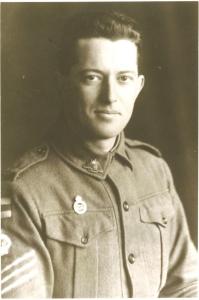
Stanley Everard STEPHENS

Stanley Everard Stephens (Photograph courtesy of M. Stephens)

Stanley Everard Stephens (Photograph courtesy of M. Stephens)

Per his military service record (regimental no. 6320), Stanley Everard Stephens was born at Melbourne, Victoria. He gave his age as 24 years and 11 months, his marital status as single, and his occupation as journalist. His description on his medical was height 5 feet 7 inches tall, weight 136 lbs., with a fair complexion, brown eyes, and brown hair. His religious denomination was Church of England. He claimed to have previous military service with the Naval Reserve and the New Guinea Expeditionary Force. He completed his medical on the 9th October 1915 at Gilgandra (the day before the commencement of the Coo-ee March), and was attested by Captain Nicholas at Gilgandra on the 9th October 1915.

Stanley Stephens joined the Coo-ee March as both a recruit, and as a special reporter to The Farmer and Settler, of which his father Harry J. Stephens was the editor.

On the march he was given the rank of Acting Sergeant, and was appointed Secretary of the travelling committee of control appointed for the Coo-ee March at Stuart Town, with Major Wynne as chairman, Captain Hitchen, Q.M.S. Lee, and Mr H. T. Blacket, during a visit by A. H. Miller (Secretary), and C. H. Richards and P. J. MacManus, from the Gilgandra Recruiting Committee.[1] In this role he assisted with the day to day running of the march, and maintained the accounts.[2]

After completing the march he went to Liverpool Camp as reinforcement for the 13th Battalion. He was made Acting Company Sergeant Major on 16th November 2015.

On 7th February 1916 Acting Company Sergeant Major Stephens was sent to the Depot School for NCO’s, then on 18th March 1916 he was sent to the Officer School at Duntroon.

His father Harry Stephens wrote in a letter to A. H. Miller (Secretary of the Gilgandra Recruiting Committee) dated 9th March 1916 (the day after most of the Coo-ees embarked for Egypt on the HMAT A15 Star of England) : ‘Stan is now at the officers’ school, which this week is at the show ground, Sydney, but next week should be at Duntroon. The Coo-ees sailed on Wednesday morning. They spent the previous night at the show ground and Stan was with them right through and saw them off. He would have liked to go with them, but I thought he ought not to miss the greater opportunity offered in the officers’ school. He speaks of them as the finest of all the reinforcements that were reviewed the other afternoon. They have done well so far, and there need be no doubt of the record they will put up when they join the 13th. in Egypt – one of the battalions that has done excellently in the Gallipoli fighting.’[3]

He returned to the 13th Battalion on the 10th of May 1916 as Acting Company Sergeant Major.

On his embarkation roll his rank was Acting Sergeant, and his address at time of enrolment was 25 Roslyn Gardens, Darlinghurst, N.S.W., and his next of kin is listed as his mother, Mrs E. [Effie] Stephens, 19 Roslyn Gardens, Darlinghurst, N.S.W.

Acting Sergeant Stephens departed Sydney on the HMAT A14 Euripides on 9th September 1916 as 20th reinforcement for the 13th Battalion, and arrived in Plymouth, England, on 26th October 1916. With him travelled fellow Coo-ees Acting Sergeant Thomas W. Dowd, and Acting Corporal Francis Charles Finlayson.

On 4rd November 1916 Acting Sergeant Stephens marched into the 4th Training Battalion at Codford, England.

On 20th December 1916 Acting Sergeant Stephens departed Folkestone aboard the SS Princess Clementine bound for France. On 22nd December 1916 he arrived at the 4th Australian Division Base Depot at Etaples, France, where he reverted to the rank of Private.

The Farmer and Settler reported that ‘Stan E. Stephens, of the “Farmer and Settler” staff, who left Sydney as sergeant-major of a reinforcement company of the 13th Battalion, lost his n.c.o. rank as soon as he set foot in France, because the Australian army there has a healthy regulation that gives precedence to men that have earned their stripes’.[4]

On 2nd January 1917 Private Stephens joined at the 13th Battalion at Ribemont, France, to undergo training.

Private Stephens described his first “baptism of fire” going “over the top” on a raid on a German trench in the front line in the vicinity of Guedecourt, France, on the night of 4th February 1917, in a letter home that was published in The Farmer and Settler on 17th August 1917.[5]  He wrote:

… “Some one said: ‘Get ready’, and I was just wishing I was at home, or anywhere else in the wide world, when a fervent ‘Ah!’ in the vicinity made me look around. A mess-tin full of rum was being passed along. Everyone took a swig, and passed it on. There was plenty in it when it came to me, and I just gulped down a couple of mouthfuls and handed it to Fin [Finlayson], when, ‘bang,’ ‘bang,’ ‘screech,’ ‘screech,’ over our heads came some shells. Many men involuntarily ‘ducked,’ but were reassured by someone saying: ‘They’re ours.’ So they were. The barrage had started — only a minute to go! Thank Heaven for that rum. It pulled me together, stopped the nervous trembling that made me afraid that everybody would notice me and think I was going to ‘squib’ it. I was cool enough to notice things then, but still I glanced hatefully now and then at the top of the bank above me.

“Somebody said: ‘Now!’ There was a bustle, and I found myself up in No Man’s Land jostling someone to get around a shell-hole. The order had come simultaneously from both ends of our line, so that we at the centre were a bit behind — a sag in the middle. Everything could be seen as clear as day; the line stretched out to right and left. We crouched in our advance, moving slowly, picking our way, with the shells shrieking over us, and bursting only a few yards in front of us. I thought about the ‘backwash.’ Why weren’t some of us killed. Would they knock our heads off if we stood up straight? We were in semi-open order, perhaps five or six deep, and advancing slowly. Oh!, the weight on my back from the heavy kit and the stooping. Yet I felt amused at the struggles of a chap that was sitting down, softly cursing a piece of barbed wire— such silly, meaningless curses. Another stumbled in front of me, and I nearly jabbed him with my bayonet. Then I looked around smartly, to see if any one was close enough behind me to treat me likewise.

“The wire! We were up to it already. But the shells weren’t finished. They had made a good mess of it, I saw as I stepped through from loop to loop. A piece caught me somewhere, but something gave way and I was free again. No; the shells weren’t finished yet. ‘They are bursting behind me.’ I exclaimed to myself, ‘Why on earth don’t I get killed? Are they charmed, so as to kill only Fritzes.’ I caught the flash of another out of the tail of my eye, and then there was a straight line of intermittent flashes in front. What’s this? At that moment I slid and scrambled down a steep, bank and found myself in the German trench!

“Our barrage was just lifting. A Fritz officer afterwards said: ‘I knew you were  Australians; you come in with your barrage; you are too quick for us.’ Yes, we went in with the barrage, instead of a few moments after it— and without a casualty!

“The details of this, my first hop-over, my baptism of fire, are indelibly printed on my memory. I shall always remember the impressions made on me, down to the most trivial incident of the hop-over. Thinking over it afterwards, I have tried to reason out why we got in with our barrage. It’s a good fault, for it prevents the Germans from getting ready for us when the barrage lifts. The Germans reckon that the Australians are always too quick for them that way. I certainly believe that a spirit of ‘don’t-care-a-damn’ was abroad; or, maybe, it was hereditary bloodthirstiness that came out in the excitement, and made us, for the time being, all ‘hogs for stoush.’ I think only the fear that we would be killed by our own curtain of fire kept us from actually running. It wasn’t the rum, anyhow, as the slanderous have asserted. The rum, I found out afterwards, was our first casualty, being broken in the coming up, so that the only rum issued was half a demi-john to a small section of trench that I happened to be in. The jar was found by a chap taking German prisoners back half an hour later, still  nearly half full.’… [Click here to read a full transcription of this article:  https://cooeemarch1915.com/2015/03/19/stanley-e-stephens-letter-about-his-baptism-of-fire-in-the-trenches]

Three days later, on 7th February 1917 Private Stephens was slightly wounded in action whilst the Battalion was in action near Guedecourt, France. He was one of 51 wounded this day another 21 members of the Battalion were killed. He re-joined the Battalion on 15th February 1917 whilst it was training and conducting fatigues at Mametz, France.

Just over two months later, on 11th April 1917 Private Stephens was reported Missing in Action during an attack on the Hindenburg Line near Bullecourt, France. He was one of 367 men from the Battalion reported missing this day, and another 25 were killed and 118 wounded.

After a Court of Enquiry was held by the Battalion on 8th October 1917 Private Stephens was officially listed as Killed in Action.

Private Stephens has no known grave, and his name is commemorated on the Australian National Memorial at Villers-Bretonneux, France.

Private Stephen’s name on the Villers-Bretonneux Memorial, France (Photograph: S. & H. Thompson 7/9/2014)

Private Stephens’ name on the Villers-Bretonneux Memorial, France (Photograph: S. & H. Thompson 7/9/2014)

Private Stephens’ name is also commemorated on panel 71 on the Australian War Memorial First World War Roll of Honour.

[1] ‘Our soldiers’, The Dubbo Liberal and Macquarie Advocate, 26 October 1915, p. 2, http://nla.gov.au/nla.news-article77601552

[2] ‘Gilgandra Recruiting Association’, Gilgandra Weekly, 10 December 1915, p. 6, http://nla.gov.au/nla.news-article119922432

[3] Letter from H. J. Stephens to A. H. Miller dated 9th March 1915 in: Alex Halden (Joe) Miller papers mainly relating to the Gilgandra Coo-ee Recruitment March, New South Wales, 1912-1921, 1939. Gilgandra Coo-ee Recruitment March correspondence and papers, 1915-1939.

[4] ‘The soldiers that voted “No”’, The Farmer and Settler, April 1917, p. 2, http://nla.gov.au/nla.news-article116643546

[5] ‘A baptism of fire’, The Farmer and Settler, 17 August, 1917, p. 2, http://nla.gov.au/nla.news-article116642518


Joe BILLING

Joe BILLING

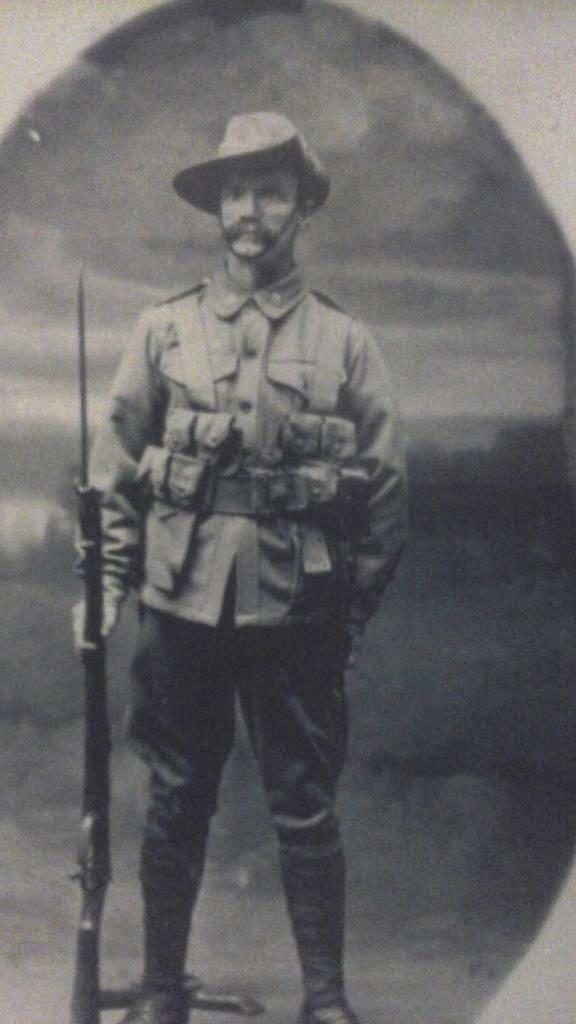
Per his military service record (regimental no. 2160), Joe Billing was born at Derby, England. He gave his age as 22 years and 6 months, his marital status as single, and his occupation as farm labourer. His description on his medical was height 5 feet 8 ½ inches tall, weight 11 stone 3 lbs., with a fair complexion, blue eyes, and light brown hair. His religious denomination was Church of England. He claimed that he had no previous military service.

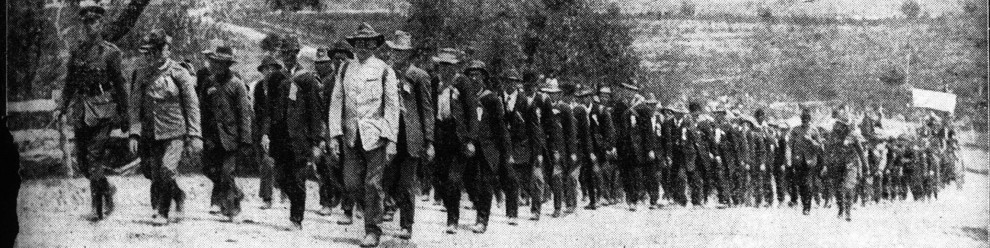
He gave his address on his Application to Enlist in the Australian Imperial Force form as “Tallwood via Blayney”, and there is a note at the top of this form stating that “This man presented himself at Millthorpe on the night of 25/10/15”. He had completed his medical several days before on the 21st October 1915 at Orange. He was attested by Captain Nicholas at Millthorpe on 26th October 1915. Joe Billing was one of two recruits who joined the Coo-ee March at Millthorpe.

After completing the march he went to Liverpool Camp as reinforcement for the 7th Light Horse Regiment.

On his embarkation roll his address at time of enrolment was 54 Junction Street, North Sydney N.S.W., and his next of kin is listed as his father, William Billing, Hathtop, Forston, Derbyshire, England.

On 11th March 1916 Trooper Billing departed Sydney on the HMAT A67 Orsova, arriving in Egypt on the 14th April 1916, where he was taken on strength in the 2nd Light Horse Training Regiment at Tel El Kebir.

On 26th April 1916 Trooper Billing was hospitalised at the Number 2 Stationary Hospital with Influenza. On 16th May 1916 he was discharged from hospital and marched into the 2nd Light Horse Training Regiment at Tel El Kebir, Egypt.

On 13th June 1916 Trooper Billing was admitted to the 2nd Australian Stationary Hospital suffering from Bronchitis. On 17th June 1916 he was transferred to the 3rd Australian General Hospital. On 18th June 1916 he was transferred to the British Red Cross Hospital. On 21st June 1916 he was transferred to the 19th General Hospital. He was discharged on 11th July 1916 and sent back to the 2nd Light Horse Training Regiment.

On 28th July 1916 Trooper Billing was transfered to the 7th Light Horse Regiment.

On 4th May 1917 Trooper Billing was sent to the 2nd Light Horse Field Ambulance suffering from Conjunctivitis. On 5th May he was moved back to the 54th Casualty Clearing Station. On 6th May 1917 he moved by Hospital Train to the 26th Casualty Clearing Station at El Arish, arriving later that day. On 7th May 1917 he was transferred to the 24th Stationary Hospital at Kantara, Egypt, arriving on 8th May 1917. Later that day he was transferred to the 14th Australian General Hospital at Abbassia, Egypt.

On 13th May 1917 Trooper Billing was discharged from hospital and reported to the 2nd Light Horse Training Regiment at Moascar, Egypt.

On 1st July 1917 Trooper Billing was sent to the School of Instruction. He returned to the 2nd Light Horse Training Regiment on 15th September 1917.

On 1st October 1917 Trooper Billing was sent to the School of Instruction (Hotchkiss Gun Course). He returned to the 2nd Light Horse Training Regiment on 16th October 1917.

On 18th November 1917 Trooper Billing left the 2nd Light Horse Training Regiment for return to the 7th Light Horse Regiment, which he rejoined on 11th December 1917.

On 9th February 1918 Trooper Billing was sent to the 2nd Light Horse Field Ambulance sick. He was discharged and rejoined the 7th Light Horse Regiment on 16th February 1918.

On 20th May 1918 Trooper Billing was sent to the Australian Rest Station at Jericho, Palestine, suffering Malaria. On 21st May 1918 he was moved back to the 65th Casualty Clearing Station, then the 75th Casualty Clearing Station at Jerusalem. On 23rd May 1918 he was moved back by Hospital Train to the 47th Stationary Hospital at Gaza. On 29th May 1918 he transferred to the 24th Stationary Hospital at Kantara, Egypt. On 30th May 1918 he was transferred to the 14th Australian General Hospital. He was discharged on 21st August and sent to the 2nd Light Horse Training Regiment. He rejoined the 7th Light Horse Regiment on 15th September 1918.

On 8th October 1918 Trooper Billing was sent to the 2nd Light Horse Field Ambulance. On 15th of October 1918 he was moved back to the 76th Casualty Clearing Station. On 16th October 1918 he was admitted to the 31st General Hospital. On 18th October 1918 he was discharged and sent to a Convalescent Depot. He rejoined the Regiment on 3rd November 1918.

Following Turkey’s surrender on 30th October 1918 and the Armistice on 11th November 1918, on 27th November 1918 Trooper Billing was sent to the Dardanelles with the 7th Light Horse Regiment. He returned to Egypt on 22nd January 1919.

On 18th February 1919 Trooper Billing was admitted to the 24th Stationary Hospital with Malaria. He was transferred to the 14th Australian General Hospital on 28th February 1919.

On 15th March 1919 Trooper Billing departed Suez, Egypt, aboard the H.T. Euripides bound for Australia.

He arrived in Australia on 20th April 1919, and was discharged as medically unfit on 3rd August 1919.