New WWI Timeline webpage

New WWI Timeline page

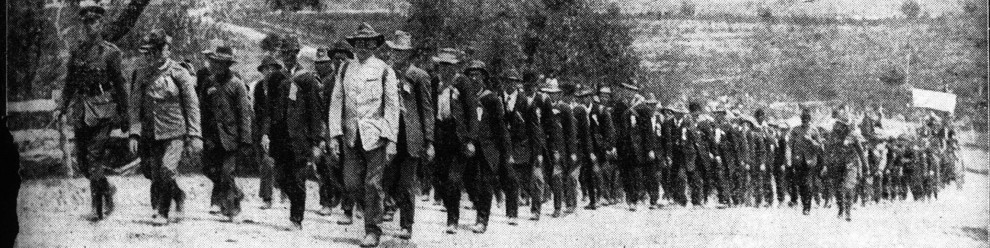
The story of the Coo-ees did not finish with their arrival in Sydney on 12th November 1915 at the end of the Coo-ee March.

One hundred years ago today, on 16th February 1916, the first group of fifteen Coo-ees embarked overseas on active service from Sydney, on the HMAT Ballarat A70.

Stephen and I plan to provide an overview of the Coo-ees’ involvement in the First World War on a WWI Timeline on this website.

We have spent the past few weeks collating the information we have collected on the Coo-ees to create a timeline of their involvement in WWI – what ships they embarked on from Australia to travel to Egypt or England, and for most, on to France to the Western Front, and the dates for those who were casualties. We are also gathering information for other significant events in their service, including information about those Coo-ees who received military awards for their actions.

We plan to tie these details in to the progress of the First World War in the Timeline.

Each month from February 2016 until the end of the centenary of WWI I aim to write a blog entry containing details for what happened regarding the Coo-ees for that month one hundred years’ previously, and add the entry’s details to the new WWI Timeline webpage at https://cooeemarch1915.com/wwi-timeline

Where names of the Coo-ees are listed in entries, their names will have hyperlinks to their individual records that I have written to date, for further information about each Coo-ee. (For those Coo-ees where I have not yet added an individual entry, I will update the Timeline with the hyperlink for each mention of their name after I complete their entry).

I will also from time to time add names for further Coo-ees to entries, and/or update other information on the WWI Timeline webpage.

For some entries, I will add hyperlinks to letters from the Coo-ees, or newspaper articles, which relate to that particular event or person, or add quotes to the Timeline from these letters and articles, or other sources.

Information will start being added to the WWI Timeline webpage in the next few days…


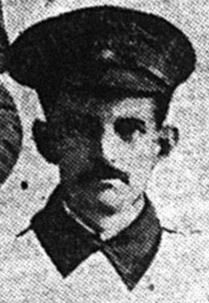
William Charles WALKER

William Charles WALKER

Per his initial military service record (4616), William Charles Walker was born at Norfolk, England. He gave his age as 22 years and 10 months, his marital status as single, and his occupation as labourer. His description on his medical was height 5 feet 6 ½ inches tall, weight 10 stone 4 lbs, with a medium fair complexion, brown eyes, and dark brown hair. His religious denomination was Church of England. He had a tattoo mark of clasped hands and English and American flags on his right forearm. He completed his medical at Molong on 22nd October 1915, and was attested by Captain Nicholas at Molong (8 miles east) on 22nd October 1915. He claimed to have no previous military experience.

It was reported in The Western Champion that the Parkes Recruiting Association had held a recruiting meeting ‘for the purpose of enrolling recruits who were willing to join the volunteers now on the way, by road, from Gilgandra to Sydney’, and that ‘five men had mounted the lorry in response to the appeal’, and that ‘one of them went on to Dubbo’, with the remaining four planning to proceed to Molong to join the contingent.[1] William Charles Walker was one of the four recruits sent by the Parkes Recruiting Association to join the Coo-ees at Molong.

After completing the march he went to Liverpool Camp as reinforcement for the 13th Battalion.

On his embarkation roll his address at time of enrolment was Wayvilla, Melford Street, Hurlstone Park, Sydney, N,S,W., and his next of kin is listed as his father, M. Walker, 6th St. Clement Street, Barnsbury, London, England.

On 16th February 1916 Private Walker was one of the first group of Coo-ees to embark overseas, and departed Sydney on the HMAT Ballarat A70 as 14th reinforcement for the 13th Battalion.
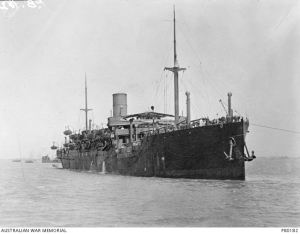
HMAT Ballarat A70, 18/2/1916. Photograph from the AWM Collection PB0182.

HMAT Ballarat A70, 18/2/1916. Photograph from the AWM Collection PB0182.

The HMAT Ballarat A70 arrived in Egypt on 22nd March 1916. On 1st April 1916 Private Walker was transferred to the 54th Battalion.

On 19th June 1916 Private Walker left Alexandria aboard H.T. Caledonian bound for France, and arrived at Marseilles on 29th June 1916.

Just three weeks later, on 19th/20th July 1916 Private Walker was wounded in action during the Battle of Fromelles, receiving a gunshot wound to his right arm. On 22nd July 1916 he was placed aboard the Hospital Ship Cambria at Boulogne, bound for England. On 23rd July 1916 he was admitted to the Southwark Military Hospital at East Dulwich, England.

He was discharged from hospital on 18th September 1916 and marched into the 14th Training Battalion.

His service record holds a certified extract of a marriage certificate for William Charles Walker and Jessie Elizabeth Browning at the Parish of St. James Church, Islington, dated 16th December 1916.

On 22nd February 1917 Private Walker was charged with being absent without leave from Tattoo on 2nd February 1917 till 0850 on 18th February 1917. He was awarded 17 days detention and fined 31 days pay.

On 16th March 1917 Private Walker was admitted to the Wareham Isolation Hospital suffering from Mumps. He was discharged and sent to the Number 4 Command Depot on 4th April 1917.

On 28th April 1917 Private Walker was charged with being absent without leave from Tattoo from 18th April 1917 until 22rd April 1917. He was awarded 6 days Field Punishment Number 2 and fined 16 days pay.

On 10th May 1917 Private Walker was transferred to the 61st Battalion.

On 6th July 1917 Private Walker went before a District Court Martial at Hurdcott charged with being absent without leave from Tattoo from 12th May 1917 till apprehended by the Military Police at 2030 on 12th June 1917. He pleaded guilty and was sentenced to 60 days detention and fined 115 days pay. He was sent to the Wadsworth detention barracks to undergo his sentence. He was released from Wadsworth Detention Barracks on 27th August 1917 and marched into the 61st Battalion.

On 13th September 1917 Private Walker departed Southampton bound for France, to reinforce the 54th Battalion. He marched into his unit in the 54th Battalion in France on 2nd October 1917.

On 30th January 1918 Private Walker was charged with being absent without leave from 9 pm on 21st November 1917 till apprehended by the Military Police at 11 am on 11th December 1917. He was awarded 24 days Field Punishment Number 2 and fined 45 days pay.

A letter in his service record from his mother dated 15th October 1919 advised that his father, Matthew Walker, was killed in an air raid in London on 28th January 1918.

On 5th February 1918 Private Walker proceeded to the UK on leave. On 20th February 1918 he was granted an extension of leave from 20th to 27th February 1918.

On 4th April 1918 Private Walker went before a District Court Martial held at 58 Warwick Square, London, charged with being absent without leave in that he failed to report to the RTO at Victoria Station at 7.30am on 27th February 1918 until he surrendered himself to the civil police on 24th March 1918. He was fined 37 days pay.

On 23rd April 1918 Private Walker went before another District Court Martial held at Warwick Square charged with deserting His Majesty’s Service on 7th April 1918 by failing to proceed overseas to join his unit in France as it was his duty to do and remained absent without leave till apprehended by the Civil Police in London on 15th April 1918. He pleaded not guilty and was found guilty. He was sentenced to 6 months detention and fined 199 days pay.

On 24th April 1918 Private Walker marched into the Lewes Detention barracks to undergo his sentence.

On 15th August 1918 he was discharged from detention with the remainder of his sentence suspended, to march into Number 1 Command Depot at Sutton Veny, England.

His service record shows that he was reported absent without leave again a week later.

On 12th November 1918 Private Walker went before a District Court Martial charged with being absent without leave from 2359 on 22nd August 1918 till 0730 on 3rd October 1918 (when he returned), then being absent without leave from 0900 on 12th October 1918 till 0930 on 2nd November 1918. He pleaded guilty and was sentenced to 120 days detention.

On 27th November 1918 Private Walker marched into the Lewes Detention barracks to undergo his sentence. On 13th February 1919 he was released from detention with the remainder of his sentence suspended, to the 54th Battalion.

On 6th March 1919 Private Walker was charged with being absent without leave from 1400 on 17th February 1919 till 1700 on 28th February 1919. The matter was dismissed.

On 15th March 1919 Private Walker was charged with being absent without leave from 0900 on 11th March 1919 till 1200 on 14th March 1919. He was awarded 5 days Field Punishment Number 2 and fined 9 days pay.

On 19th April 1919 Private Walker was charged with being absent without leave from 13th April 1919 to 17th April 1919. The case was dismissed.

On 17th July 1919 Private Walker was admitted to the 1st Australian Auxiliary Hospital at Harefield, England. He was discharged on 21st July 1919.

On 24th August 1919 Private Walker was “granted indefinite leave awaiting, awaiting a family ship”.

Private Walker applied for discharge in the U.K., his reason stated in his Application for a Discharge in a Country other than Australia, dated 8th September 1919, as: “My wife now being pregnant I think it wise for me to stay in England. My mother also getting on in years and her being a widow, I think it my duty to try and comfort her, but if returned to Australia, it would cause inconvenience on both sides. I can obtain employment, my relations are holding business in London. I must note the fact that my father was killed in an Air Raid over London on 28.1.18”.

This application was approved, and he was discharged in London on 18th December 1919.

[1] ‘Marching to Sydney’, Western Champion, 21 October 1915, p. 19, http://nla.gov.au/nla.news-article112309615


Edwin Joseph FULLER

Edwin Joseph FULLER

Per his military service record (regimental no. 4493), Edwin Joseph Fuller was born at Norwood, England. He gave his age as 21 years and 6 months, his marital status as single and his occupation as laborer. His description on his medical was height 5 feet 3 7/8 inches tall, weight 9 stone 10 lbs., with a fair complexion, brown eyes, and brown hair. His religious denomination was Church of England. He claimed that he had no previous military experience. He completed his medical on the 23rd October 1915 at Orange, and was attested by Captain Nicholas at Orange on the 24th October 1915.

He was named as one of the recruits who joined the Coo-ees at Orange in the Leader.[1]

After completing the Coo-ee March he went to Liverpool Camp as reinforcement for the 13th Battalion.

On his embarkation roll his address at time of enrolment was Cresswell Hall, Easter Avenue, Kensington, Sydney, N.S.W., and his next of kin is listed as his father, J. E. [John Edwin] Fuller, 6 Southdown Road, Stanley Road, Wallington, Surrey, England. (He had listed his posted address as “Orange” on his initial Application to Enlist in the Australian Imperial Force form addressed to the Recruiting Officer at Orange).

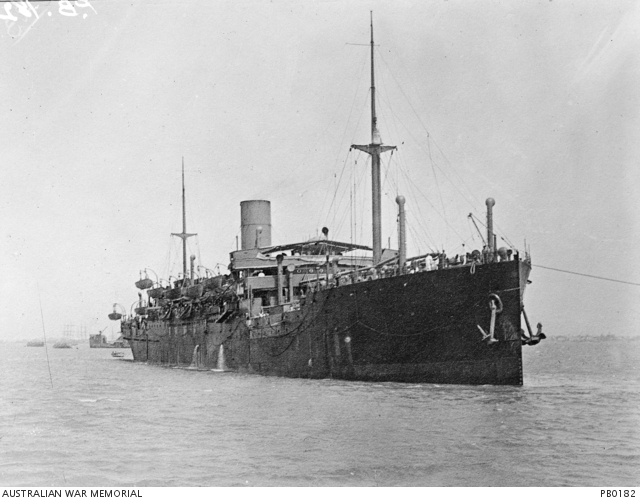
On 16th February 1916 Private Fuller was one of the first group of Coo-ees to embark overseas, and departed Sydney on the HMAT Ballarat A70 as 14th reinforcement for the 13th Battalion.

HMAT Ballarat A70, 18/2/1916. Photograph from the AWM Collection PB0182.

HMAT Ballarat A70, 18/2/1916. Photograph from the AWM Collection PB0182.

During the voyage, Private Fuller was charged with being absent without leave from 0500 till 1900 on 8th March 1916 whilst at Colombo, Ceylon. He was fined 1 day’s pay.

The HMAT Ballarat A70 arrived in Egypt on 22nd March 1916. On 1st April 1916 Private Fuller was transferred to the 54th Battalion.

On 19th June 1916 Private Fuller left Alexandria aboard H.T. Caledonian bound for France. On 26th June 1916 whilst at sea he was charged with Slackness at Sentry Post. He was awarded 14 days Field Punishment Number 2. The HT Caledonian arrived at Marseilles on 29th June 1916.

On the 19th/20th July 1916 Private Fuller participated in the Battle of Fromelles. He survived the battle unscathed, however on 31st July 1916 he was sent to the 14th Field Ambulance suffering shell shock. On 2nd August he was moved back to a Casualty Clearing Station. He rejoined the 54th Battalion on 16th August 1916.

On 25th November 1916 Private Fuller was sent to the 14th Field Ambulance ill with Influenza. On 26th November 1916 he was moved back to the 38th Casualty Clearing Station. On 28th November 1916 he was placed aboard an Ambulance train and sent to the 5th General Hospital at Rouen, France, being admitted on 29th November 1916. On 8th December 1916 he was placed aboard the Hospital Ship Carisbrook Castle at Le Harve and evacuated to England.

After he had recovered in England, on 16th January 1917 Private Fuller departed Folkestone, England, aboard the Transport Princess Clementine bound for France. On 17th January 1917 he arrived at the 5th Australian Division Base Depot at Etaples, France.

On 19th January 1917 Private Fuller was charged with being absent from medical parade after being duly warned for draft. He was awarded 4 days Field Punishment Number 2.

On 31st January 1917 Private Fuller was charged with being in Etaples without a pass. He was awarded 8 days Field Punishment Number 2.

On 8th February 1917 Private Fuller rejoined the 54th Battalion when it was manning the front line in the vicinity of Longueval, France.

On 30th April 1917 Private Fuller was sent to the 15th Field Ambulance sick with Influenza. He was admitted to the 5th Division Rest Station later that day. On 25th June 1917 he rejoined the 54th Battalion when it was conducting training at Warloy, France.

On 16th September 1917 Private Fuller was promoted to Lance Corporal.

On 20th September 1917 Lance Corporal Fuller went on leave to England. He rejoined the 54th Battalion on 4th October 1917.

Three weeks later on 23rd October 1917 Lance Corporal Fuller was wounded in action, being gassed. He was sent to the 8th Australian Field Ambulance. On 24th October 1917 he was moved back to the 5th Division Rest Station. He rejoined the 54th Battalion on 7th November 1917.

On 25th February 1918 Lance Corporal Fuller went to Paris on leave. He rejoined the 54th Battalion on 9th March 1918.

On 19th March 1918 Lance Corporal Fuller was sent to the 14th Field Ambulance suffering Scabies. He was sent to the 5th Australian Division Rest Station later that day, He rejoined the 54th Battalion on 23rd March 1918.

On 25th September 1918 Lance Corporal Fuller went on leave to England.

He returned from leave on 11th October 1918 and was transferred to the 56th Battalion.

On 9th April 1919 Lance Corporal Fuller marched into the Australian Base Depot at Le Harve, France, to commence his return to Australia. He departed France on 16th April 1919. He arrived at Weymouth, England on 17th April 1919 and marched into the Number 5 Group.

Lance Corporal Fuller departed Devonport, England, on 2nd June 1919 for return to Australia, aboard the H.T. Beltana. He arrived in Australia on 19th July 1919. He was discharged Termination of Enlistment on 12th September 1919.

[1] ‘The Recruits’, Leader, 25 October 1915, p. 4, http://nla.gov.au/nla.news-article117842599


Percy George BROWN

Percy George BROWN

Per his military service record (regimental no. 4446), Percy George Brown was born on 27th July 1894 at Westham, England. He gave his age as 21 years and 3 months, his marital status as single and his occupation as labourer. His description on his medical was height 5 feet 7 inches tall, weight 148 lbs., with a fair complexion, blue eyes, and brown hair. His religious denomination was Church of England. He claimed that he had 18 months previous military service in the 1st C. B. Kings Royal Rifles. He completed his medical on the 16th October 1915 at Wellington, and was attested by Captain Nicholas at Dripstone on the 19th October 1915.

Percy George Brown was named as being one of the Wongarbon recruits in the Dubbo Liberal and Macquarie Advocate.[1]

After completing the Coo-ee March he went to Liverpool Camp as reinforcement for the 13th Battalion.

On his embarkation roll his address at time of enrolment was not listed, and his next of kin is listed as his father, C. H. [Charles Henry] Brown, 81 Corporation Street, West Ham, London, England. (The address he gave on his Application to Enlist in the Australian Imperial Force form addressed to the Recruiting Officer at Dubbo was ‘Box 5, Cunnamulla Qld).’

Just before Private Brown embarked, it was reported in the Dubbo Liberal and Macquarie Advocate that he had written “The first batch of the Gilgandra “Coo-ees” to leave for the front will sail at the end of the present week. About 15 men, including four who enlisted at Dubbo, have been transferred into an earlier reinforcement of the same battalion, which the rest of the “Coo-ees” are in”.[2]

On 16th February 1916 Private Brown was one of this first group of Coo-ees to embark overseas, and departed Sydney on the HMAT Ballarat A70 as 14th reinforcement for the 13th Battalion, which arrived in Egypt on the 22nd March 1916.

HMAT Ballarat A70, 18/2/1916. Photograph from the AWM Collection PB0182.

HMAT Ballarat A70, 18/2/1916. Photograph from the AWM Collection PB0182.

On the 1st April 1916 he was transferred to the 54th Battalion at Ferry Post.

On 3rd April 1916 he was admitted to the 1st Field Ambulance, then moved to the 2nd Casualty Clearance Station at Ismailia with defective vision. On 4th April 1916 he was admitted to the 1st Australian Stationary Hospital with Myopia. On 9th April 1916 he returned to his unit.

On 2nd June 1916 he was admitted to the 1st Australian Stationary Hospital with defective vision. On 8th June he was transferred to the Training Battalion at Alexandria.

On 6th August 1916 Private Brown left Alexandria aboard His Majesty’s Transport Megantic, bound for England. On 1st December 1916 he marched into the 4th Training Battalion at Codford.

On 31st December 1916 he departed Folkestone aboard the transport Princess Henrietta for France. He marched into the 5th Australian Division Base Depot at Etaples on 1st January 1917.

On 6th February 1917 Private Brown marched out of the Base Depot and on 8th February 1917. He was taken on strength of the 54th Battalion when it was manning the front line near Longueval France. On 24th February 1917 he was admitted to the 13th Australian Field Ambulance for eye treatment. He rejoined his Battalion on 25th February 1917.

On 4th April 1917 Private Brown was sent to hospital sick. On 20th April 1917 he was admitted to the 11th Stationary Hospital at Rouen with Influenza. On 24th April 1917 he was sent to the 2nd Convalescent Depot. On 1st May 1917 he was transferred to the 11th Convalescent Depot. On 29th July 1917 he was transferred to the 5th Australian Division Base Depot at Le Harve. He rejoined the 54th Battalion on 18th August 1917 when it was refitting and training at Renescure, France.

On 18th October 1917 Private Brown was admitted to the 8th Field Ambulance with debility. He was sent to the 5th Division Rest Station that same day. On the 30th of October 1917 he was sent to the 50th Casualty Clearing Station. On the 4th of November 1917 he was transferred to the 6th General Hospital at Rouen with Bronchitis. On the 8th of November 1917 he was transferred to the 2nd Convalescent Depot, then on 11th November 1917 he was sent to the 11th Convalescent Depot. On 30th January 1918 he marched into the 5th Division Base Depot at Le Harve. On 20th February 1918 he returned to the 54th Battalion when it was in the front line near Wijtschate, Belgium.

On 26th February 1918 Private Brown went on leave to the United Kingdom. He returned to the Battalion on 15th March 1918 when it was in reserve near Dranoutre, Belgium.

On 24th April 1918 Private Brown was with the 54th Battalion when it defending the vicinity of Villers Bretonneux, France. The Germans launched an attack on the Battalion which included the use of gas shells. The attack was repulsed with heavy casualties suffered by the Germans. The 54th Battalion suffered 3 men killed, 10 wounded, and 28 gassed. Private Brown was amongst those gassed. He was evacuated to the 14th Australian Field Ambulance then moved to the 61st Casualty Clearing Station. On 25th April he was sent to the 10th General Hospital at Rouen, then on 28th April to the 73rd General Hospital at Trouville, France. On 13th June 1918 he was transferred to the 1st Australian Convalescent Depot at Le Harve. On 3rd August 1918 he marched into the 5th Australian Division Base Depot.

On 13th August 1918 he rejoined the 54th Battalion when it was at Fuilloy, France, preparing to move back into the line.

On 27th September 1918 Private Brown was admitted to the 14th Australian Field Ambulance sick. On 28th September 1918 he was moved back to the 20th Casualty Clearing Station. On 29th September 1918 he was transferred to the 3rd Stationary Hospital at Rouen. On 30th September 1918 he was transferred to the 2nd Convalescent Depot. On 1st October 1918 he was moved to the 6th General Hospital. On 4th October 1918 he was evacuated to England, arriving at the 2nd Western General Hospital in Manchester on 5th October 1918. On 13th November 1918 he was transferred to the 3rd Auxiliary Hospital at Dartford. On 25th November 1918 he moved to the 2nd Convalescent Depot at Weymouth.

On 9th December 1918 Private Brown departed England for return to Australia aboard HT Argyllshire.

He arrived in Australia on 14th February 1919, and was discharged on 10th October 1919.

Private Brown’s return to Australia was reported as follows in The Dubbo Liberal and Macquarie Advocate: “Recently returned from the front, after three years of active service, Private P. G. Brown. He joined up with “The Coo-ees” at Wongarbon early in October, 1915. He has seen service in Egypt and France, and was wounded and gassed. His many friends in Wongarbon and district will be pleased to hear of his safe return”.[3]

[1] ‘Our Soldiers’, The Dubbo Liberal and Macquarie Advocate, 29 October 1915, p. 4, http://nla.gov.au/nla.news-article77601711

[2] ‘Our Soldiers’, The Dubbo Liberal and Macquarie Advocate, 4 February 1916, p. 4, http://nla.gov.au/nla.news-article77604424

[3] ‘Personal Notes’, The Dubbo Liberal and Macquarie Advocate, 7 March 1919, p. 3, http://nla.gov.au/nla.news-article75636042


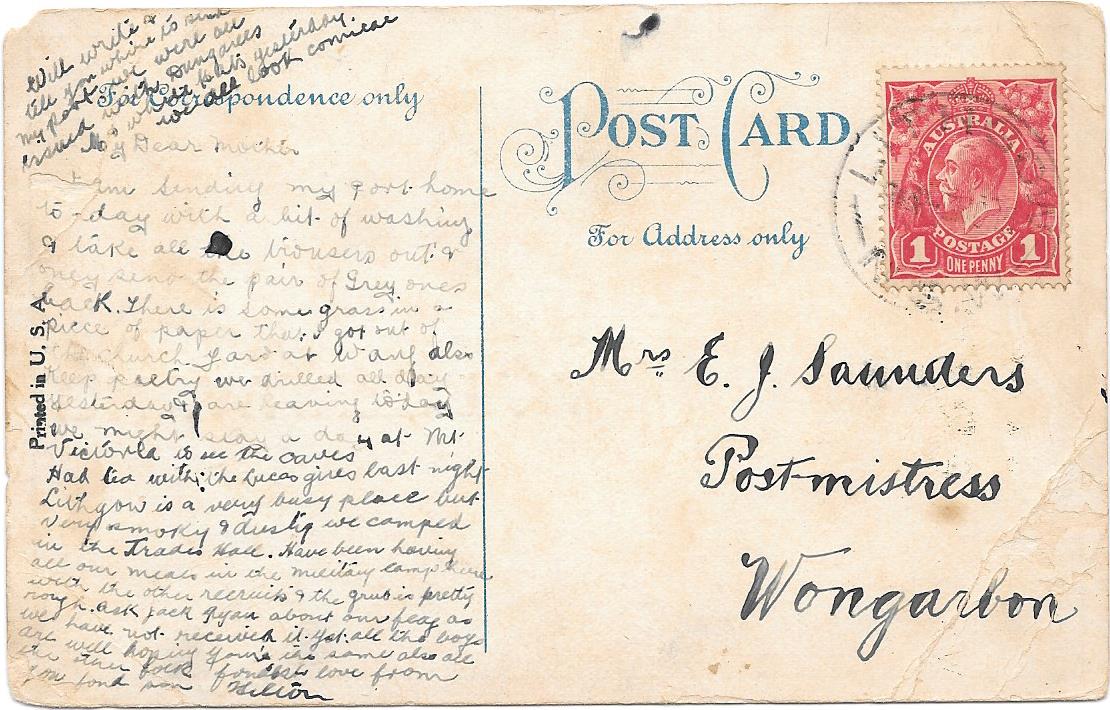
Postcard from W. H. Saunders sent from Lithgow

W. H. Saunders’ postcard sent from Lithgow to his mother (advising he was sending his port home with his washing)

I recently received a copy of this wonderful postcard that William Hilton Saunders, who was one of the Wongarbon Coo-ees, sent home to his mother Mrs E. J. Saunders at Wongarbon, while the Coo-ees were at Lithgow.

Postcard sent by W. H. Saunders, courtesy of Mrs K. Edmonds

Postcard sent by W. H. Saunders to his mother, courtesy of Mrs K. Edmonds

Back of postcard sent by W. H. Saunders to his mother, courtesy of Mrs K. Edmonds

Back of postcard sent by W. H. Saunders to his mother, courtesy of Mrs K. Edmonds

His grand-daughter has assisted me to transcribe the handwriting on the back of the postcard as follows:

‘Dear Mother

I am sending my port home to-day with a bit of washing & take all the trousers out & only send the pair of grey ones back. There is some grass in a piece of paper that I got out of the church yard at Wang, also keep poetry. We drilled all day yesterday & are leaving today. We might stay a day at Mt Victoria to see the caves.

Had tea with the Lucas girls last night. Lithgow is a very busy place but very smoky & dusty. We camped in the Trades Hall. Have been having all our meals in the military camp here with the other recruits & the grub is pretty rough. Ask Jack Ryan about our flag as we have not received it yet. All the boys are doing well hoping you’re the same also all the other folk.

Fondest love from your fond son Hilton.

[Written across the top left hand corner]

Will write & tell you where to send my port. We were all issued with Dungarees & white hats yesterday. We all look comical’.

The Coo-ees were at Lithgow from Monday 1st November to Wednesday 3rd November 1915. Based on the information W. Hilton Saunders included in the postcard, he wrote it on Wednesday 3rd November (the day the Coo-ees left Lithgow), and the Coo-ees were issued with their blue dungarees and white hats uniforms on Tuesday 2nd November 1915.

The McGregor brothers at Colyton

The McGregor brothers at Colyton

The Farmer and Settler reported that a recruit that joined the Coo-ee March at the village of Colyton on 10th November 1915 ‘… was one of the family of McGregors that has already given five sons to the Empire. As the family said their brave but tearful farewells to the sixth McGregor, all that witnessed that incident realised the fine loyalty of the McGregors…’.[1]

The Sydney Morning Herald, and The Cumberland Argus and Fruitgrowers Advocate, both reported that at Colyton ‘Here it was that a young man stepped forward at the call for recruits. He was a member of a family – the McGregors – that had already given five sons to the Empire’s cause, and he was the sixth. A little family group bade him farewell, as with some determination he took his place in the ranks…’.[2]

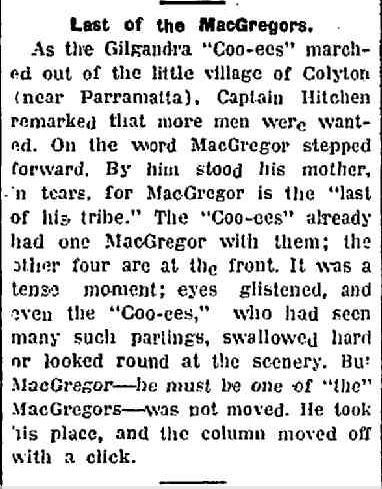
The Inverell Times, and the Glen Innes Examiner, both printed the following story:

'Last of the MacGregors' (The Inverell Times 19/11/1915)

‘Last of the MacGregors’ (The Inverell Times 19/11/1915)

‘As the Gilgandra “Coo-ees” marched out of the little village of Colyton (near Parramatta), Captain Hitchen remarked that more men were wanted. On the word MacGregor stepped forward. By him stood his mother, in tears, for MacGregor is the “last of his tribe.” The “Coo-ees” already had one MacGregor with them; the other four at the front. It was a tense moment; eyes glistened, and even the “Coo-ees,” who had seen many such partings, swallowed hard or looked round at the scenery. But MacGregor—he must be one of “the” MacGregors—was not moved. He took his place, and the column moved off’.[3]

Andrew McGregor (1858-1910) and Alice Mary McGregor (nee Hunt) (1862-1897), who both had died before the First World War, had six sons: Andrew James McGregor (1882-1938) who joined the Coo-ees at Gilgandra; Arthur Ernest McGregor (1884-1969) who signed up to join the Coo-ees at Springwood; William George McGregor (1889-1941) who enlisted in the AIF on 2nd February 1915 (Service no. 2064); Oscar John McGregor (1891-1932) who enlisted in the AIF on 1st July 1915 (Service no. 2886); Frederick Herbert McGregor (1893- 1939)[who does not appear to have enlisted]; and , Charles Henry McGregor (1896-1916) who enlisted in the AIF on 7th May 1915 (Service no. 2657).

It is not known which McGregor brother was reported in the newspapers to have joined the Coo-ees at Colyton on their way from Penrith to Parramatta on Wednesday 10th November 1915.  There was no official count for any recruits joining the Coo-ee March at Colyton.

Three of the brothers (William George McGegor, Oscar John McGregor, and Charles Henry McGregor) had already enlisted earlier in 1915, before the Coo-ee March.

It may possibly have been one of the two brothers who had already joined the Coo-ee March (Andrew James McGregor or Arthur Ernest McGregor), who may have briefly left the march to say goodbye to his family and/or finalize his affairs in Sydney (where both their next of kin lived), before rejoining the march at Colyton.

Alternatively it could possibly have been Frederick Herbert McGregor who may have stepped forward to try and join up to be with his two brothers who had already enlisted in the Coo-ee March, (and his other three brothers who had enlisted earlier in 1915),  and who may then not have passed the medical examination at Parramatta that evening.  Only 27 of the 41 who presented at Parramatta passed the medical examination.

However, only five of the six McGregor brothers appear to have been successful in enlisting in the AIF in the First World War.

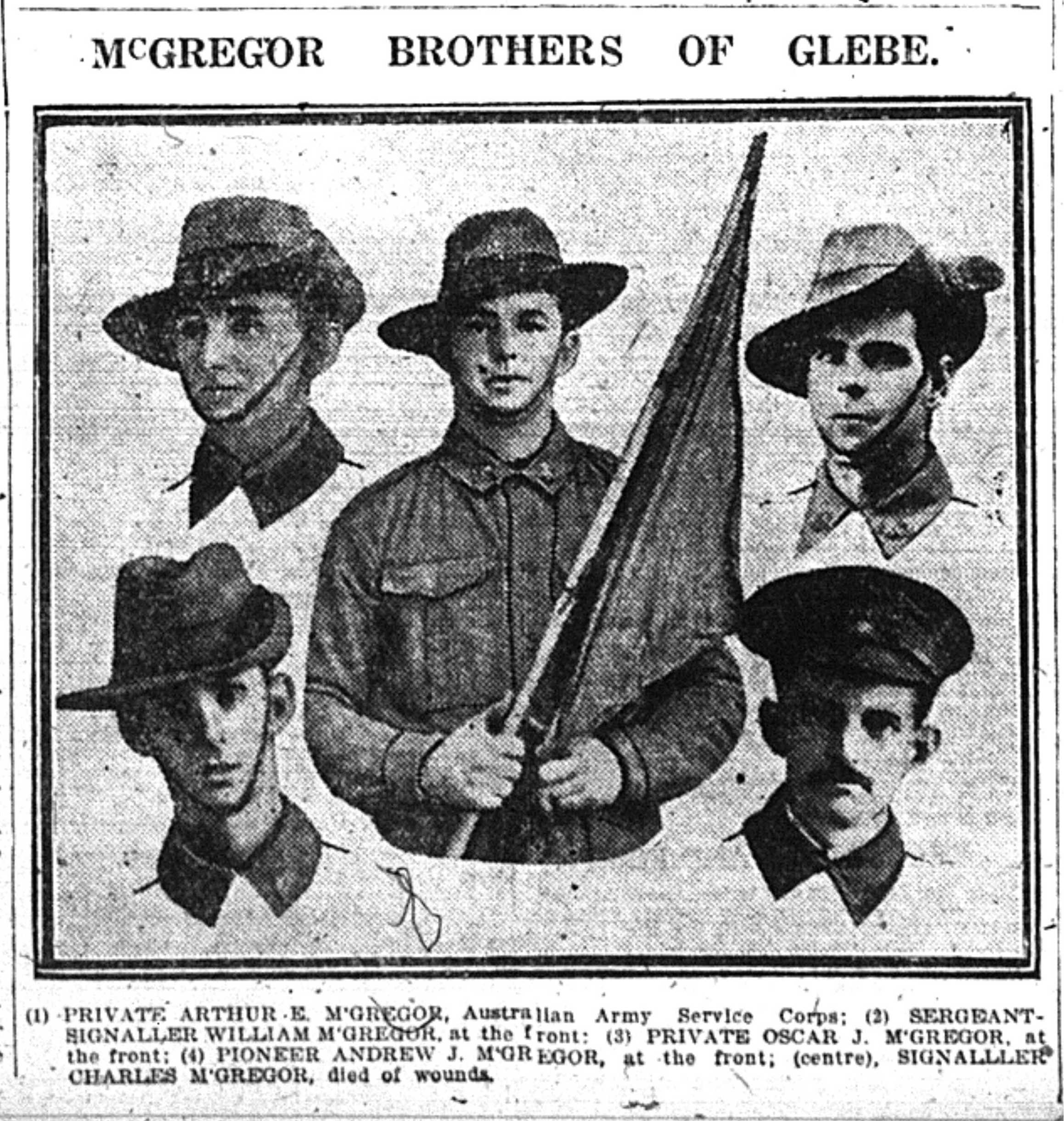
A photograph of the five McGregor brothers who enlisted in the AIF was published in the Daily Telegraph on 22nd September 1916.[4]

The McGregor brothers - 2 were Coo-ees (Daily Telegraph, 22/9/1916)

‘McGregor brothers of Glebe’ (Daily Telegraph, 22/9/1916)

The photograph had the caption: ‘(1) Private Arthur E. McGregor, Australian Army Service Corps; (2) Sergeant-Signaller William McGregor, at the front; (3) Private Oscar J. McGregor, at the front; (4) Pioneer Andrew J. McGregor, at the front; (centre), Signaller Charles McGregor, died of wounds”.

If it was Frederick Herbert McGregor who tried to join his two brothers who had already enlisted in the Coo-ee March at Colyton, there is no mention of him in an article about the Coo-ees that was published a year later in the Sunday Times, which reported that ‘Wee McGregor [Andrew James MacGregor], as he was known all along the march, sold out a flourishing bakery business in Gilgandra to join the Coo-ees. He had three brothers at the front, and he wanted to follow them. On the way to Sydney another brother jumped in the ranks – five from one family’.[5]


[1] ‘The Route March : In the Suburbs of Sydney’, The Farmer and Settler, 12 November 1915, p. 3, http://nla.gov.au/nla.news-article116652489

[2] ‘Overland. March of the Gilgandra Recruits. Welcome at Parramatta’, The Sydney Morning Herald, 11 November 1915, p. 9, http://nla.gov.au/nla.news-article15624001 ; ‘The March from Penrith’, The Cumberland Argus and Fruitgrowers Advocate, 13 November 1915, p. 11, http://nla.gov.au/nla.news-article86101787

[3] ‘Last of the MacGregors’, The Inverell Times, 19 November 1915, p. 4, http://nla.gov.au/nla.news-article185649407 ; ‘Last of the MacGregors’, . (1915, November 15). Glen Innes Examiner, 15 November 1915, p. 5, http://nla.gov.au/nla.news-article184175444

[4] ‘McGregor brothers of Glebe’, Daily Telegraph, 22 September 1916, p. 9.

[5] ‘The Coo-ees en route for Berlin : anniversary of their start’, Sunday Times, 8 October 1916, p. 9, http://nla.gov.au/nla.news-article121335018


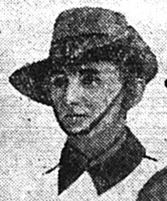
Arthur Ernest MCGREGOR

Arthur Ernest MCGREGOR

Arthur Ernest McGregor (Daily Telegraph 22/9/1916)

Arthur Ernest McGregor (Daily Telegraph 22/9/1916)

Per his military service record (regimental no. 10156), Arthur Ernest McGregor was born at Newtown, N.S.W. He gave his age as 31 years, his marital status as married, and his occupation as baker. His description on his medical was height 5 feet 9 inches tall, weight 10 stone, with a dark complexion, dark blue eyes, and dark hair. His religious denomination was Church of England. He claimed that he had no previous military service. He as attested at Springwood on the 5th November, 1915, then completed his medical at Springwood on the 8th November 1915. The Coo-ees were in Springwood on the night of the 8th November 1915, where they gained 5 recruits, and this date was listed as the “joined on” date on his attestation paper, and also on his embarkation nominal roll.

His older brother Andrew James McGregor was already a recruit on the march, having joined the Coo-ees at the start at Gilgandra. He too was a baker, who had sold his business in Gilgandra to join the Coo-ees.

After completing the march Andrew James McGregor went to Liverpool Camp as reinforcement for the 13th Battalion until 18th February 1916, when he transferred to the 6th Reinforcements for 19th Army Service Corps Company 2nd Field Bakery.

On his embarkation roll his address at time of enrolment was 10 Fairmount Street, Petersham N.S.W., and his next of kin is listed as his Aunt, Mrs. B. H. Campbell, at the same address.

On 5th May 1916 Private McGregor departed Sydney on the HMAT Karroo A10, arriving in Egypt on the 7th June 1916.

On the 10th July 1916 he embarked for Marseilles on the transport Tunisean, arriving on 16th July 1916. He marched into 2nd Division B Depot at Etaples on 19th July 1916.

On the 29th July 1916 he was taken on strength as reinforcement to the 2nd Field Bakery at Calais.

On 21st November he was admitted to hospital sick, and evacuated to England on 5th December 1916. He was admitted to the 3rd Auxiliary Hospital in England on 14th December 1915. He was discharged to Perham Downs on furlough from 29th December 1916 to 13th January 1917.

On 30th January 1917 he marched in from No. 1 Command Depot to R.S.C. Training Depot at Parkhouse. He proceeded overseas with A.S.C. reinforcements from Folkstone on 25th February 1917, and marched into No. 2 Base Supply Depot at Etaples on 27th February 1917. On 30th March 1917 he was posted to the 2nd Field Bakery at Rouen.

On 8th July 1917 he proceeded on leave to the United Kingdom.  He rejoined his unit in France on 19th July 1917.

He went on leave again to the UK from 12th September 1918 to 26th September 1918.

On 12th December 1918 he went to hospital at Rouen sick, then was discharged to duty on 14th December 1918.

On 12th March 1919 he left Havre in France for England.

He was granted leave from 9th April 1919 to 9th September 1919 to make confectionary in London (non military employment), however this leave was cancelled on 12th June 1919, and he returned to 2nd Field Bakery on 8th July 1919.

He began his return to Australia on HT Persic on 13th July 1919, arriving in Australia on 2nd September 1919. He was discharged on 1st February 1920.

Andrew James MCGREGOR

Andrew James MCGREGOR

Andrew James McGregor (Daily Telegraph 22/9/1916)

Andrew James McGregor (Daily Telegraph 22/9/1916)

Per his military service record (regimental no. 4855), Andrew James McGregor was born at Sydney, N.S.W. He gave his age as 34 years and 2 months, his marital status as married, and his occupation as baker. His description on his medical was height 5 feet 4 inches tall, weight 8 stone 9 lbs, with a dark complexion, dark blue eyes, and dark hair. His religious denomination was Anglican. He claimed that he had 10 years’ experience in the Colonial Forces. He as attested by Captain Nicholas at Gilgandra on the 9th October, 1915, after completing his medical at Gilgandra on 7th October 1915.

He sold his I.X.L. Bakery business in Gilgandra before joining the Coo-ee March at Gilgandra.[1]

His younger brother Arthur Ernest McGregor also joined the Coo-ee March, being attested, and completing his medical examination, when the Coo-ees were at Springwood.

After completing the Coo-ee March Andrew James McGregor went to Liverpool Camp as reinforcement for the 13th Battalion.

On his embarkation roll his address at time of enrolment was 39 Fotheringham Street, Marrickville, Sydney, N.S.W., and his next of kin is listed as his wife, Mrs. A. [Alice] McGregor, at the same address.

On 8th March 1916, Private McGregor, along with many of the other Coo-ees, departed Sydney on the HMAT Star of England, arriving in Egypt on the 11th April 1916.

On 16th April 1916 he was transferred to the 4th Pioneer Battalion at Tel El Kebir, Egypt.

On 4th June 1916 Private McGregor, along with several other Coo-ees, left Alexandria aboard the Transport Scotian bound for France, and arrived at Marseilles on 11th June 1916.

Private McGregor served on the Western Front with the 4th Pioneer Battalion until the end of 1916, when on 22nd December 1916 he transferred to the 2nd Australian Field Bakery.

Private McGregor was granted 10 days leave to the United Kingdom on 29th June 1917.

On the 24th June 1918 Private McGregor was admitted to hospital with Sclerosis Spinal Cord. He was evacuated to hospital in England on 30th June 1918.

He began his return to Australia aboard the Transport HT Gaika on the 8th November 1918, arriving in Australian on the 29th December 1918.

Private McGregor was discharged on 4th September 1920.

[1] ‘Advertising’, Gilgandra Weekly, 22 October 1915, p.7, http://nla.gov.au/nla.news-article119923863


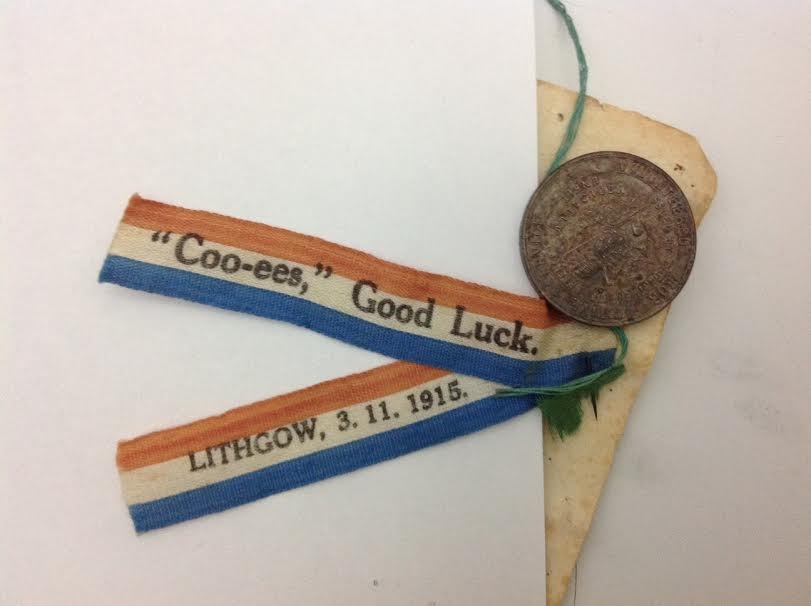
Lithgow Ribbon

Lithgow Coo-ee Ribbon

The purple Coo-ee Badge was not the only ribbon given to the Coo-ees.

It was reported in The Farmer and Settler on 5th November 1915 that ‘Lithgow turned out in force to see the last of the “Coo-ees,” and each man was given a tri-color ribbon bearing the inscription, “Lithgow, 3/11/15. ‘Coo-ee!’ Good Luck!” as a souvenir of the occasion’.[1]

I was recently sent a photograph (below) of one of these ribbons that was presented to the Coo-ee March recruits at Lithgow.

Ribbon presented to the Coo-ees at Lithgow 3/11/1815

Ribbon presented to the Coo-ees at Lithgow

[1] ‘The Route March through Lithgow District’, The Farmer and Settler, 5 November 1915, p. 3, http://nla.gov.au/nla.news-article116680017


Review of Coo-ee March 2015 Re-enactment 17th October to 11th November 2015

Review of Coo-ee March 2015 Re-enactment 17th October to 11th November 2015

I have had the privilege to participate in the Gilgandra to Sydney Coo-ee March 2015 Re-enactment from Saturday 17th October to Wednesday 11th November 2015, where the marchers arrived in Martin Place in Sydney, and took part in the Remembrance Day Parade and Service, in my role as Administration/Research Officer for Coo-ee March 2015 Inc. (Gilgandra Sub-Committee).

I gave speeches at most of the commemorative services that were held at war memorials in the towns and villages along the route, which included a description of the Coo-ees’ arrival in 1915 in that town or village, based on newspaper articles of the time, and also provided information about the Coo-ees who enlisted there. I also liaised with local RSL Sub-Branches, local councils, and other groups to organise the services.

Highlights of the Re-enactment March included meeting family descendants of some of the 1915 Coo-ees, the involvement and support of local communities, and the interaction with many local school children along the way, with school children attending services, lining the streets waving flags, calling  “Coo-ees” to welcome the marchers, and giving the marchers “high-fives” as they marched by.

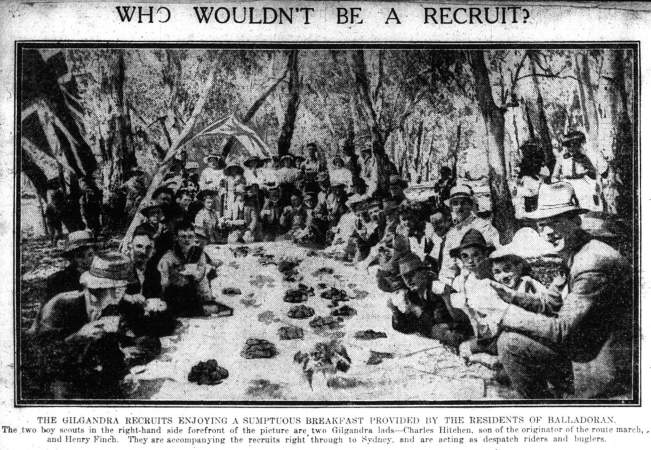
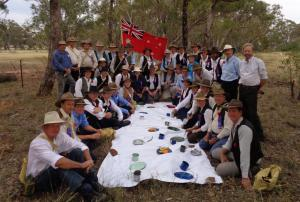
There was the opportunity for some “then and now” photographs.

Coo-ees having breakfast at Balladoran 11/11/1915

Coo-ees having breakfast at Balladoran 11/11/1915

Coo-ee marchers breakfast scene at Balladoran 18/10/2015

Coo-ee marchers breakfast scene at Balladoran 18/10/2015

Information on the Coo-ee March 2015 Re-enactment can be found at http://cooeemarch2015reenactment.com/ and there are lots of photos at  https://www.facebook.com/cooeemarchreenactment

Much of my time in recent months has been taken up with administration support in assisting my husband Stephen to prepare the traffic management plan for the route, and assist in planning and preparations for the Coo-ee March 2015 Re-enactment, so I have not had as much time as I would have liked to add further information to the cooeemarch1915.com website.

Now that the Coo-ee Marcch 2015 Re-enactment is over, Stephen and I will have time to return to our research on the 1915 Coo-ee March and the 263 men who enlisted in the AIF as a result of it, and add further entries to our website.